
SPRING 2018 20 | FRONTDOORSMEDIA .COM Jamie Killin | WEB EDITOR
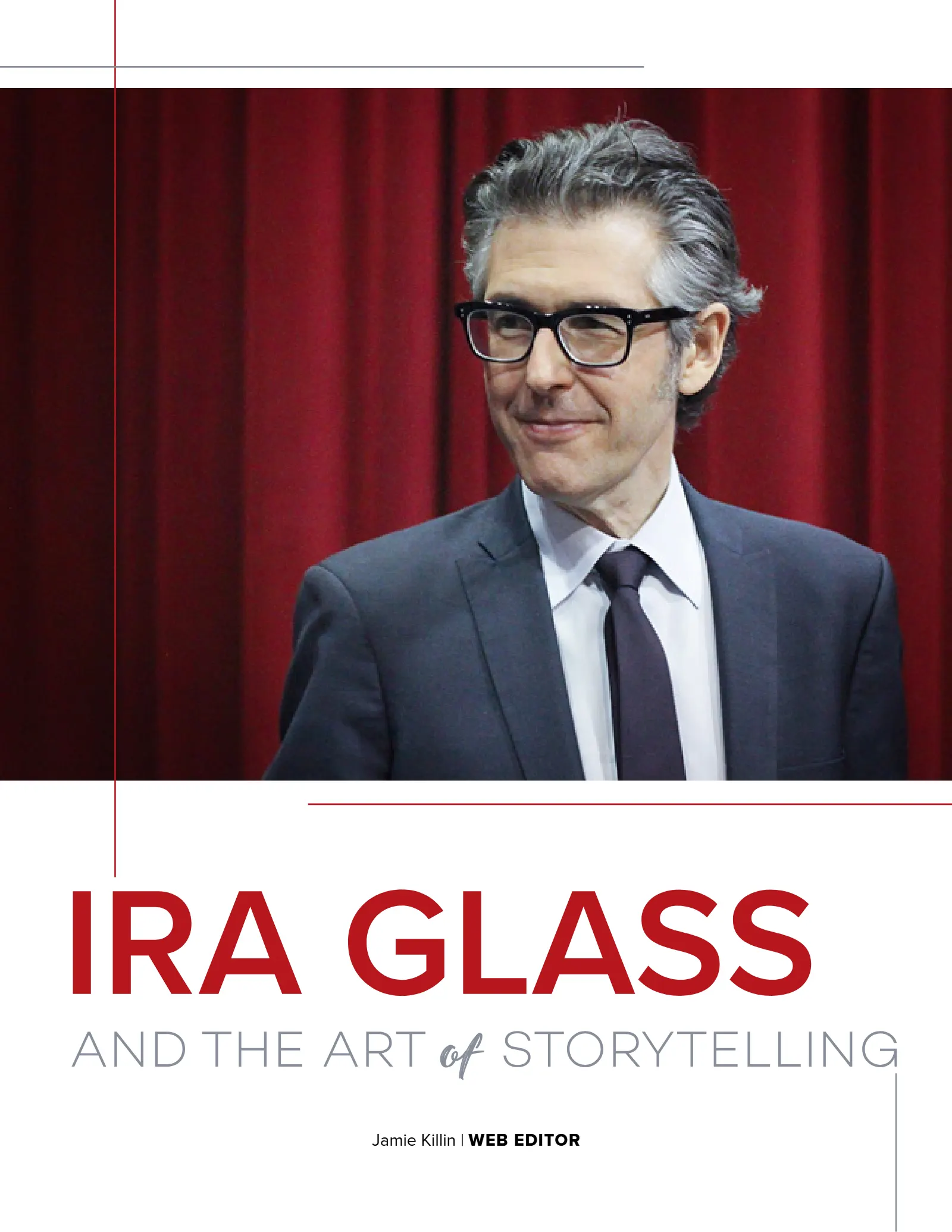
SPRING 2018 FRONTDOORSMEDIA .COM | 21 Spring Arts & Culture Directory What makes a story great? If you’ve ever written a book, produced a video or even wanted to seem more interesting at a cocktail party, you’ve probably asked yourself this question. It’s a concept the team behind “This American Life” has mastered. The weekly radio show has been on the air for over two decades, producing more than 600 episodes on a startling variety of topics. The show is heard by more than 2.2 million listeners each week over 500 radio stations across the country with each episode downloaded via podcast by an additional 2.5 million listeners. The show’s creator Ira Glass has become a public figure in his own right — a National Radio Hall of Fame inductee, a Tonight Show guest and an Edward R. Murrow Award recipient, to name just a few of the honors on his long list of accolades. According to Glass, the making of a great story, or at least a great “This American Life” story, is somewhat simple. “The ideal ‘This American Life’ story starts fast, is surprising at the beginning and is really funny at the beginning. If you’ve got that, then it’s hard to mess it up,” Glass said. “Then, plot will unfold, stuff will continue to happen and there will be feelings at different points in the plot and it will lead to something that is about a bigger idea in some way.” The idea doesn’t have to be profound, Glass assured. If it’s simply interesting it will produce some sort of feeling by the end of the story. “Saying it like that out loud makes it seem like we’re such hacks,” he added. “We sound like the hackiest people in the world.” At his talk presented by Scottsdale Arts at Orpheum Theatre in January, Seven Things I’ve Learned: An Evening with Ira Glass , he compared this formula to another popular medium — musicals. He described an experience watching Fiddler on the Roof , a show he’d seen as a child with his mother, and his sudden realization as an adult that the magical formula of the musical echoed that of his own radio show — a humorous start, a thoughtful ending and a larger message about humanity. It’s a model that was present even in the talk, which featured surprise visits by a jovial high school mascot and whimsical stories about interviewing children on the failings of love, followed by deeper discussions on the increasingly murky and polarized media landscape. “This American Life” has applied this principle to even the most commonplace topics. A perfect example, and one of Glass’s favorites, being the show that follows the victories and failures of a car dealership struggling to meet its monthly sales quota. “It’s such a simple idea but so much drama unfolded as we approached the end of the month,” Glass said. “There’s something about it that’s so simple and I really just loved the car salesmen. It was fun to get to know them and to watch them do their jobs, so that’s an episode I recommend.” While the formula clearly works, there are other elements that stand out when listening to episodes of “This American Life,” one of the most notable being the relationship between the reporters and their stories — and to the show itself. Throughout the years, listeners have heard Glass discuss his marriage, the death of a friend, his dog and his childhood ambition to become a magician. Glass relates his own anecdotes to universal themes that many listeners have experienced. “I think knowing more about the people making the show — me and the other