
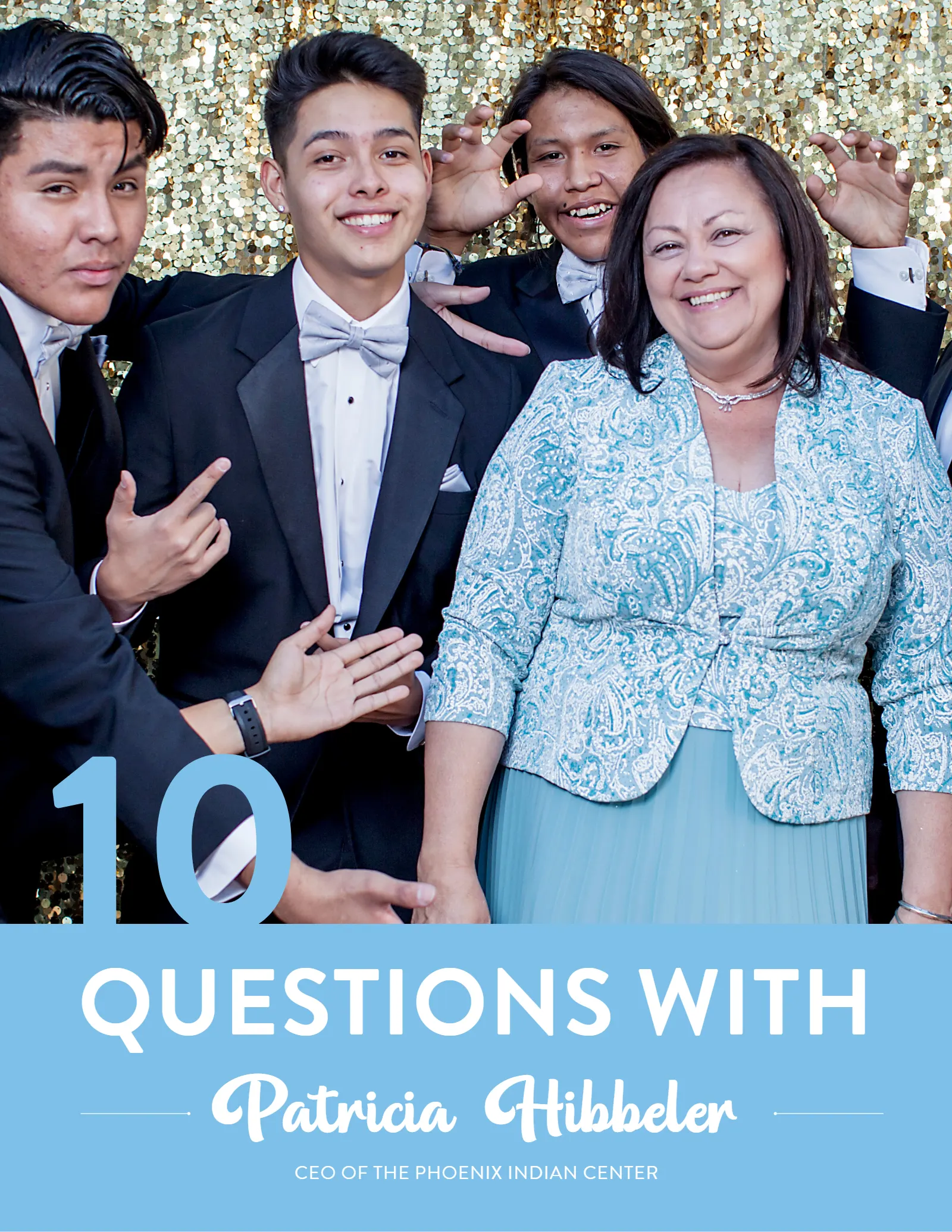
APRIL 2018 24 | Patricia Hibbeler QUESTIONS WITH CEO OF THE PHOENIX INDIAN CENTER
APRIL 2018 | 25 What’s your role with the Phoenix Indian Center? I’m the CEO, so my role is really around board development. I spend a lot of time working with my board and helping to operationalize a strategic plan that comes from their direction along with fundraising and putting all of those management skills together to put the Phoenix Indian Center on a good trajectory moving forward. How did the Phoenix Indian Center start? It began in 1947, so we’re now in our 71 st year of service here in the Valley. We started during the time of what we call “Indian relocation,” so there were many Native Americans that were being brought to the inner city. It actually became a federal policy to relocate them to the city, with the idea that they would not make it back to the reservation. So it’s part of the federal government’s assimilation policy for Native people. At that time, there were American Indians arriving in the city, many who didn’t know the language or the makeup of the city. They needed assistance with housing and help in finding a job. There was a group of community members who went to the mayor at that time and asked for assistance in creating a support center for American Indians moving to town. What is the Phoenix Indian Center’s mission? The mission is to support individuals in their goals and in their livelihood to better support themselves and their family members and be a contributing member of society. That’s really what we try to do. What programs and initiatives do you think are most important? I think they’re all equally important when we talk about our target audience of American Indians. Our signature service is job readiness so we’re working with individuals who have been out of the workforce for three months or longer. We help them to re-tool and really hone in on job- search skills, because today that’s a job in itself. What are some of the issues your clients face? We still see a fair number of individuals moving to the city who are ill-prepared for city life, especially those that are lower-income. If you’re used to finding assistance in the way that many people need assistance on the reservation, you’re finding it somewhere within the tribal offices. When you come to the city, it’s a very difficult network of systems to navigate. Sometimes the city offers support; other times it’s the county or nonprofits or even churches, so it gets really difficult. So one of our services is helping people navigate that system. We’re not an organization that can be everything to everybody, but we need to stay connected so we can connect individuals to organizations and services, based on their needs. How many people does the Phoenix Indian Center serve? We’re serving around 7,000 people annually through direct services. Those are the individuals we have direct contact with, and many of those are in repeat skill-building classes over time. We service about 20,000 annually and that includes those who might have just a one-time touch. They may come to one event, or to one of our cultural activities once or twice. We’ve served well over a million in 71 years. What are some things people may not know about American Indian culture? I think there are a lot of misconceptions, so we do a lot of cultural-awareness presentations. We do them for businesses, to help meet their diversity initiatives. We do cultural-awareness presentations for schools and teacher orientations. We do them for the foster-care system. One of the things we hear quite often is people actually believe Native Americans don’t exist anymore. They think of them as wearing beads and feathers. We arrive looking professional, just like everybody else, so they think we’re not Native. So, we have to have a conversation about what’s historical and where we are today. 1 2 3 4 5 6 7