
Judy Pearson | Contributing Writer A 2ND ACT { survivors giving back } When veterinarian John Burnham’s father died in 2007, he had an urge to connect with something bigger. His father had been in the military — a fact of which Dr. Burnham was very proud — and he began to think about how he might honor his father while using his skills with animals. We all know there are no accidents in life, and after Burnham had treated several canine patients whose owners were veterans, a spark ignited. The dogs were helping heal the unseen battle wounds these deployed men and women had experienced. Combining his own observations with the ever- growing body of research supporting pet therapy, Burnham devised a perfect marriage: Give more vets the opportunity to experience the unconditional love of a dog while reducing the number of Valley area shelter dogs. And Soldier’s Best Friend was born. “The military personnel returning with PTSD (post traumatic stress disorder) and TBI (traumatic brain injuries) find themselves going from Afghanistan to driving their minivans in the blink of an eye,” said Brenda Meir, the executive director of Soldier’s Best Friend. “There’s often not much time for that transition, not much time to decompress.” And when the symptoms of their conditions appear, those who had risked their lives for the freedom of others find themselves haunted by fear and nightmares. “We’ve had more than one veteran tell us they were considering suicide. They wouldn’t be here today, they say, if it weren’t for our program and their dog,” Meir said. The organization finds dogs at Valley shelters and rescue partners. A careful process ensues before the new BFFs are ever introduced to their veterans. Each dog is given a physical exam, all health needs are taken care of, and those over 40 pounds are X-rayed for hip dysplasia. Then they’re fostered for two to four weeks to be assessed outside the shelter environment. They also start some basic obedience with the organization’s trainers, and are then placed in their new loving forever home. “This program is for PTSD and TBI only, but the severity of issues varies greatly,” Meir said. “The dogs learn three tasks to use each time they sense their veteran is having symptoms. The teams — what we call the dog/veteran combination — work with a trainer in public outings, for a total of nine times during their training. The team is tested on each skill.” The average training takes six to nine months, but some may finish sooner and others may take a little longer, particularly those with TBI. And there is no “training schedule” per se. Teams go into training all the time. Each is required to do a private lesson and a group class every week. SIT. STAY. HEAL. Nonprofit helps soldiers find new BFFs 44 FRONTDOORS MEDIA | APRIL 2019
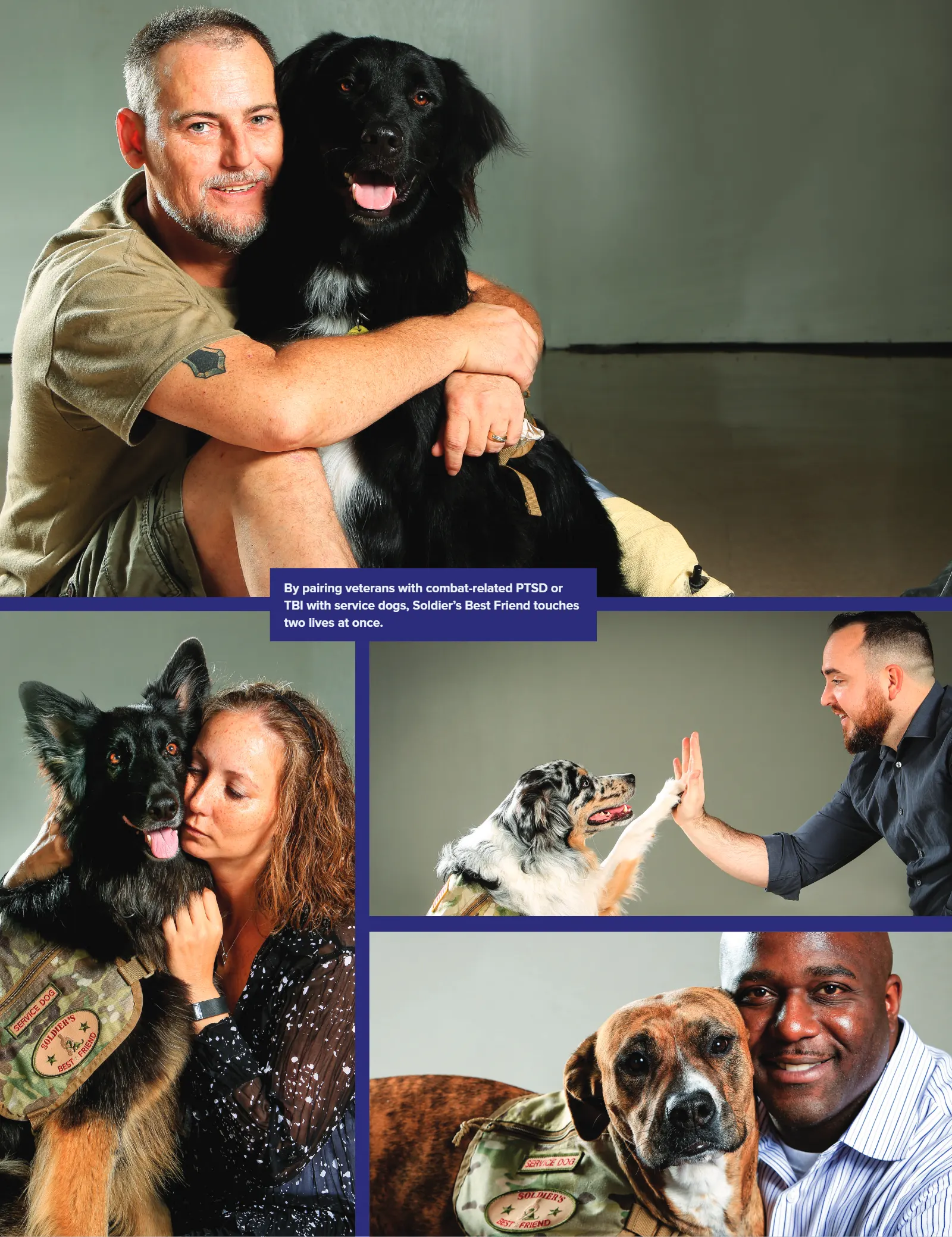
By pairing veterans with combat-related PTSD or TBI with service dogs, Soldier’s Best Friend touches two lives at once.