
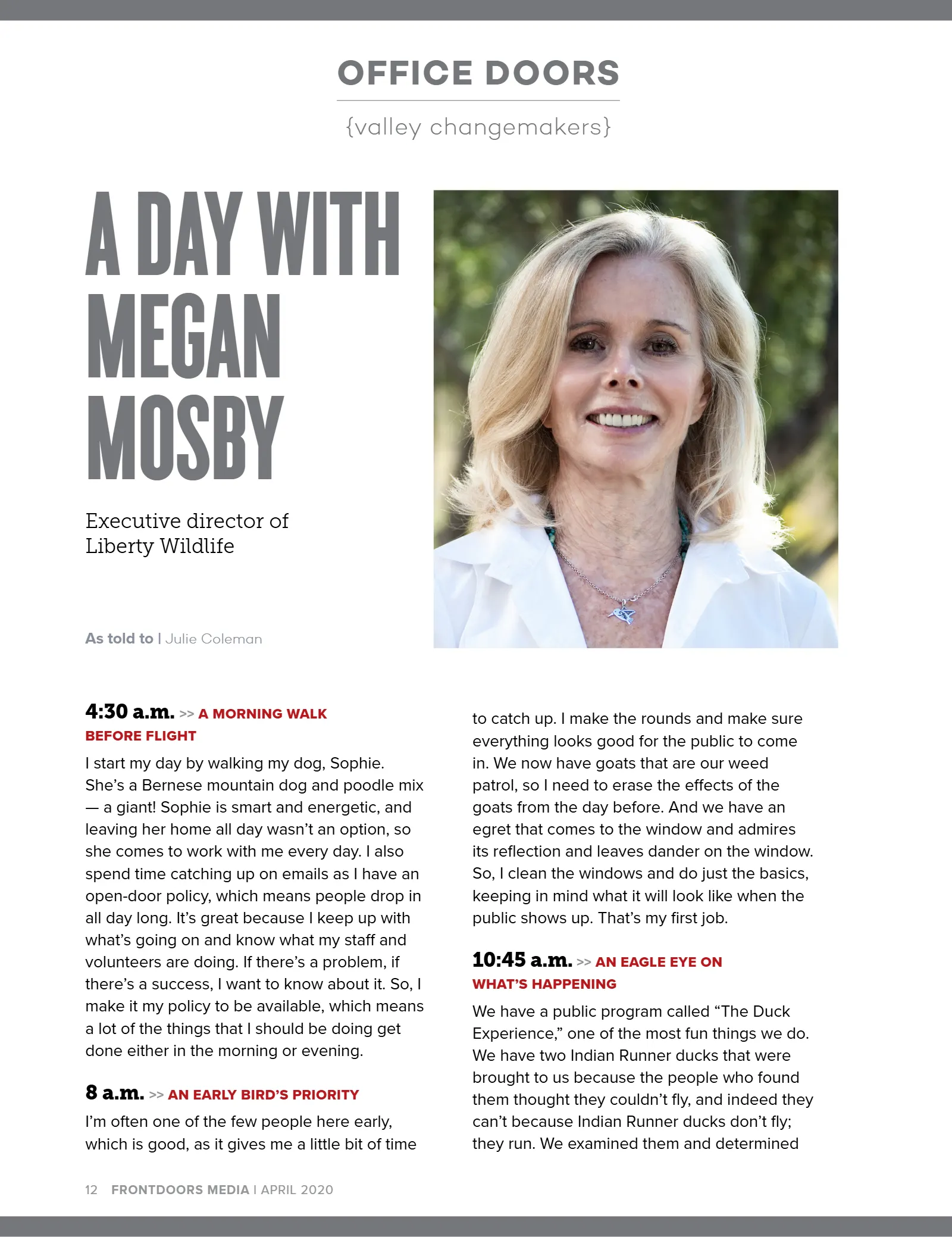
OFFICE DOORS {valley changemakers} 12 FRONTDOORS MEDIA | APRIL 2 020 Executive director of Liberty Wildlife A DAY WITH MEGAN MOSBY As told to | Julie Coleman 4:30 a.m. >> A MORNING WALK BEFORE FLIGHT I start my day by walking my dog, Sophie. She’s a Bernese mountain dog and poodle mix — a giant! Sophie is smart and energetic, and leaving her home all day wasn’t an option, so she comes to work with me every day. I also spend time catching up on emails as I have an open-door policy, which means people drop in all day long. It’s great because I keep up with what’s going on and know what my staff and volunteers are doing. If there’s a problem, if there’s a success, I want to know about it. So, I make it my policy to be available, which means a lot of the things that I should be doing get done either in the morning or evening. 8 a.m. >> AN EARLY BIRD’S PRIORITY I’m often one of the few people here early, which is good, as it gives me a little bit of time to catch up. I make the rounds and make sure everything looks good for the public to come in. We now have goats that are our weed patrol, so I need to erase the effects of the goats from the day before. And we have an egret that comes to the window and admires its reflection and leaves dander on the window. So, I clean the windows and do just the basics, keeping in mind what it will look like when the public shows up. That’s my first job. 10:45 a.m. >> AN EAGLE EYE ON WHAT’S HAPPENING We have a public program called “The Duck Experience,” one of the most fun things we do. We have two Indian Runner ducks that were brought to us because the people who found them thought they couldn’t fly, and indeed they can’t because Indian Runner ducks don’t fly; they run. We examined them and determined
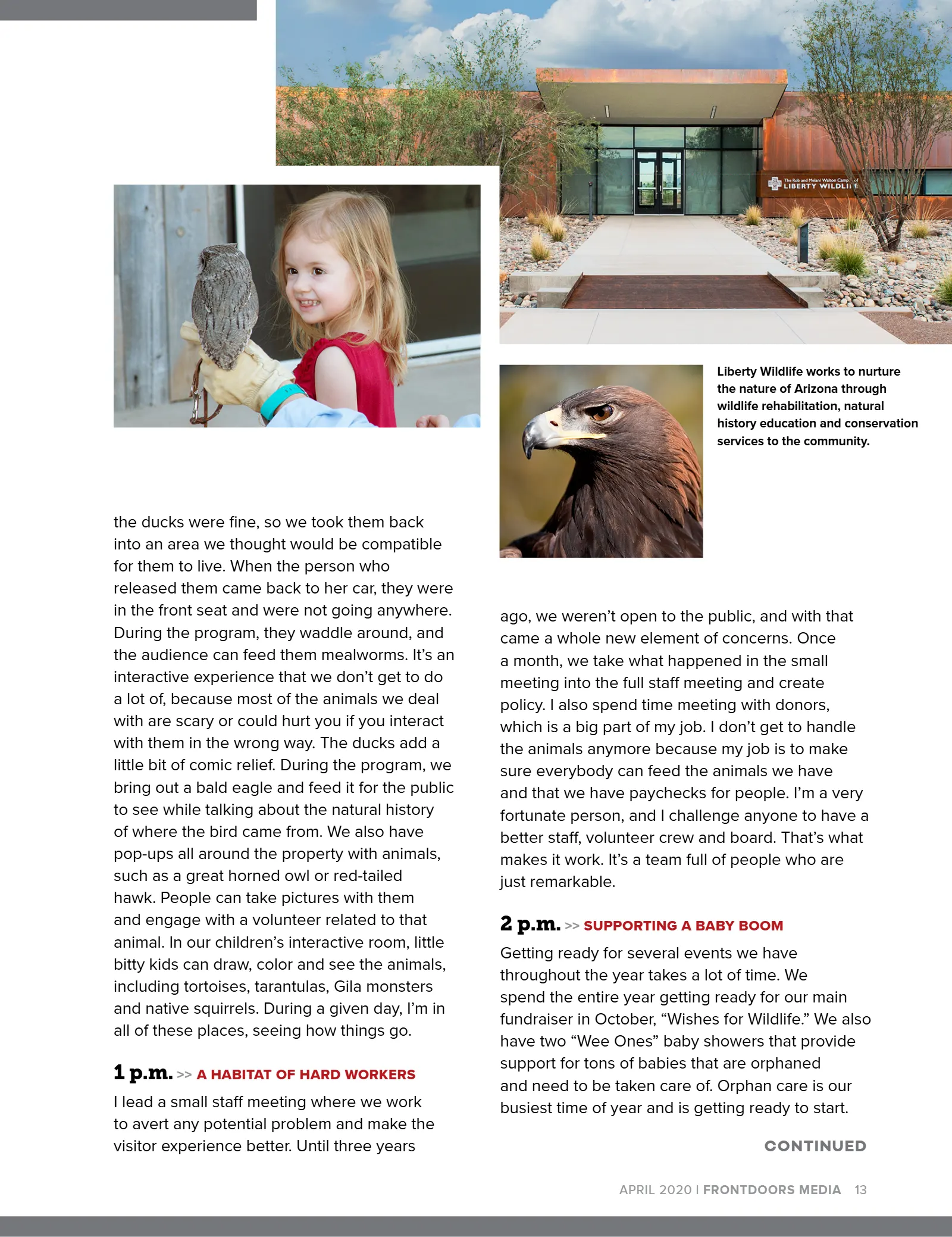
APRIL 2 020 | FRONTDOORS MEDIA 13 the ducks were fine, so we took them back into an area we thought would be compatible for them to live. When the person who released them came back to her car, they were in the front seat and were not going anywhere. During the program, they waddle around, and the audience can feed them mealworms. It’s an interactive experience that we don’t get to do a lot of, because most of the animals we deal with are scary or could hurt you if you interact with them in the wrong way. The ducks add a little bit of comic relief. During the program, we bring out a bald eagle and feed it for the public to see while talking about the natural history of where the bird came from. We also have pop-ups all around the property with animals, such as a great horned owl or red-tailed hawk. People can take pictures with them and engage with a volunteer related to that animal. In our children’s interactive room, little bitty kids can draw, color and see the animals, including tortoises, tarantulas, Gila monsters and native squirrels. During a given day, I’m in all of these places, seeing how things go. 1 p.m. >> A HABITAT OF HARD WORKERS I lead a small staff meeting where we work to avert any potential problem and make the visitor experience better. Until three years ago, we weren’t open to the public, and with that came a whole new element of concerns. Once a month, we take what happened in the small meeting into the full staff meeting and create policy. I also spend time meeting with donors, which is a big part of my job. I don’t get to handle the animals anymore because my job is to make sure everybody can feed the animals we have and that we have paychecks for people. I’m a very fortunate person, and I challenge anyone to have a better staff, volunteer crew and board. That’s what makes it work. It’s a team full of people who are just remarkable. 2 p.m. >> SUPPORTING A BABY BOOM Getting ready for several events we have throughout the year takes a lot of time. We spend the entire year getting ready for our main fundraiser in October, “Wishes for Wildlife.” We also have two “Wee Ones” baby showers that provide support for tons of babies that are orphaned and need to be taken care of. Orphan care is our busiest time of year and is getting ready to start. CONTINUED Liberty Wildlife works to nurture the nature of Arizona through wildlife rehabilitation, natural history education and conservation services to the community.