
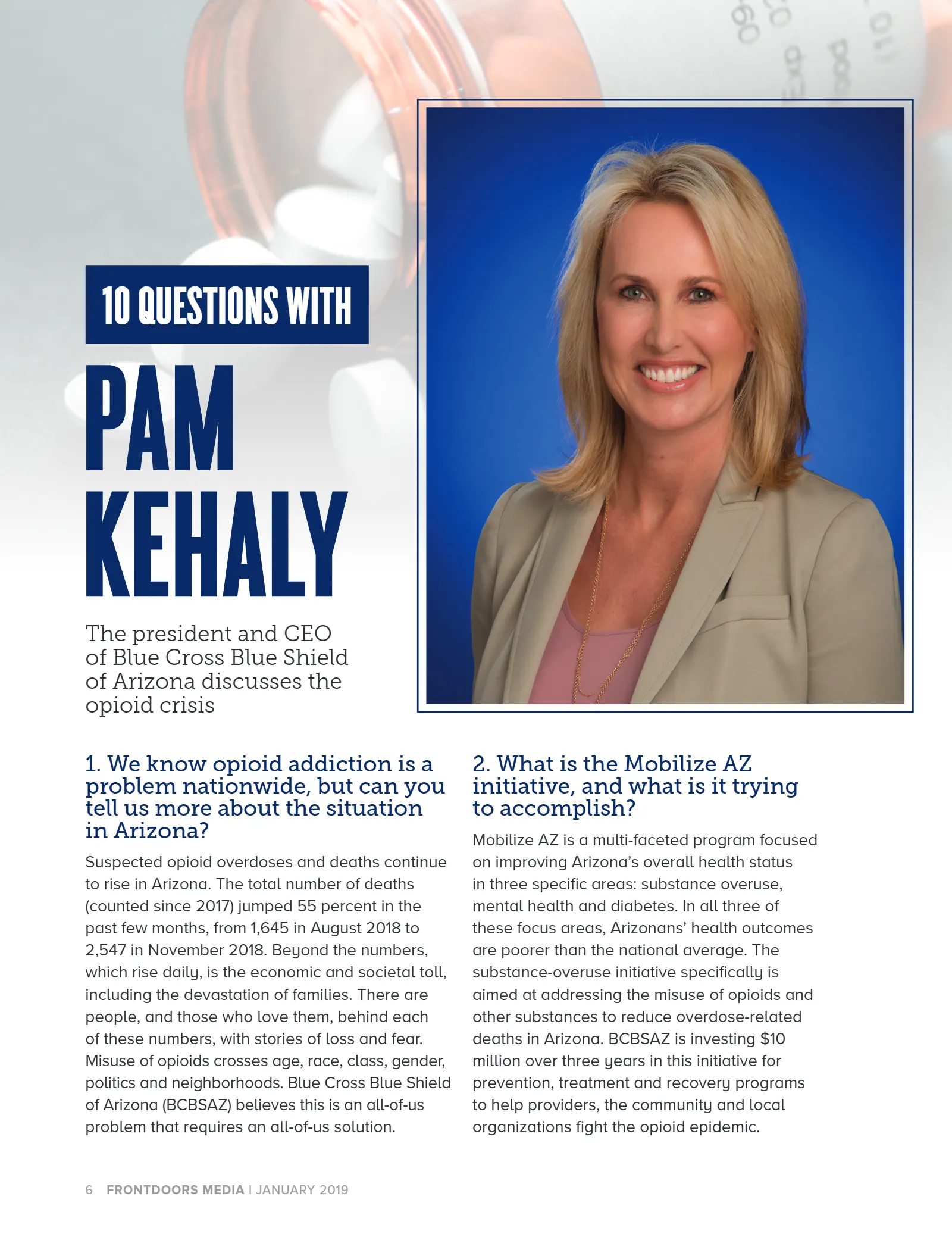
10 QUESTIONS WITH PAM KEHALY The president and CEO of Blue Cross Blue Shield of Arizona discusses the opioid crisis 1. We know opioid addiction is a problem nationwide, but can you tell us more about the situation in Arizona? Suspected opioid overdoses and deaths continue to rise in Arizona. The total number of deaths (counted since 2017) jumped 55 percent in the past few months, from 1,645 in August 2018 to 2,547 in November 2018. Beyond the numbers, which rise daily, is the economic and societal toll, including the devastation of families. There are people, and those who love them, behind each of these numbers, with stories of loss and fear. Misuse of opioids crosses age, race, class, gender, politics and neighborhoods. Blue Cross Blue Shield of Arizona (BCBSAZ) believes this is an all-of-us problem that requires an all-of-us solution. 2. What is the Mobilize AZ initiative, and what is it trying to accomplish? Mobilize AZ is a multi-faceted program focused on improving Arizona’s overall health status in three specific areas: substance overuse, mental health and diabetes. In all three of these focus areas, Arizonans’ health outcomes are poorer than the national average. The substance-overuse initiative specifically is aimed at addressing the misuse of opioids and other substances to reduce overdose-related deaths in Arizona. BCBSAZ is investing $10 million over three years in this initiative for prevention, treatment and recovery programs to help providers, the community and local organizations fight the opioid epidemic. 6 FRONTDOORS MEDIA | JANUARY 2019
3. What are some of the signs of opioid addiction? • Taking more and more of a drug or taking it longer than intended or prescribed by a doctor. • The inability to control or cut down use. • Spending a great deal of time and effort finding drugs or recovering from the use of drugs. • Having a strong urge to use. • Using a drug despite legal or social problems. • Cutting down on or avoiding important activities. • Using while doing something that puts yourself or your family in danger, like driving. • Using despite physical or mental problems. • Becoming drug tolerant, meaning needing more of the drug or needing to take it more often. • Having withdrawal — physical symptoms when you try to stop. 4. How do opioids lead to the use of heavier, illegal drugs? Prescription painkillers are often “gateway” drugs to illegal drugs like heroin. Some studies show that people who are addicted to heroin often started out abusing prescription painkillers like OxyContin or Vicodin. While not everyone who abuses a prescription opioid will move on to abuse drugs like heroin, an estimated 4 to 6 percent who misuse prescription opioids transition to heroin. 5. What are steps parents can take with their children or what can families do at home? Talk about substance use disorder early and often. Some things to consider when starting the conversation: • Choose a good time and place. • Approach your talk with openness, active listening and “I” statements. • Understand your influence as a parent. • Offer empathy and support. For more tips, go to teens.drugabuse.gov/parents . 6. What about employers? What kind of effect does opioid addiction have in the workplace? In a recent survey by the National Safety Council, 71 percent of U.S. employers reported having been affected by employee misuse of prescription medications — including opioids. This included lost productivity, on-the-job errors and more workers’ compensation claims. The Arizona Department of Health Services has compiled many great resources for employers. 7. What resources are out there for treating opioid addiction? Treatment can look different for everyone, depending on his or her readiness to receive it. A great place to start is by visiting your primary care physician to discuss treatment options. The Governor’s Office of Youth, Faith and Family has compiled a helpful resource on treatment options that can be found at substanceabuse.az.gov/substanceabuse/treatment . 8. Why is Blue Cross Blue Shield of Arizona taking a lead role in this initiative? Inspiring health across Arizona is the foundation of what we do as the state’s largest locally owned health insurer. By putting an emphasis on key community health issues, BCBSAZ aims to improve the health of all Arizonans. A report from the Centers for Disease Control and Prevention (CDC) shows life expectancy in the U.S. has declined for the second time in the last three years. The decline is unlike anything our country has seen since the early 1900s. In its report, the CDC noted that two factors, drug overdoses and suicide, have contributed significantly to America’s shrinking life expectancy. Drug overdose deaths reached a record high of more than 70,000 in 2017, which is close to a 10 percent increase from 2016 and the highest ever in the United States in a single year. The rise in overdose deaths has JANUARY 2019 | FRONTDOORS MEDIA 7