
Because it’s considered a rare disease — only 25,000 women a year are diagnosed in the U.S. — ovarian cancer is not at the forefront of doctors’ minds. Because it’s considered a rare disease — only 25,000 women a year are diagnosed in the U.S. — ovarian cancer is not at the forefront of doctors’ minds. Sadly, because of its vague symptoms, women and their physicians often attribute the signs to other causes, which extends the time to diagnosis and increases the odds of metastasis. Indeed, Colleen’s cancer had progressed to stage 3C. By the time she was diagnosed, she was looking at a likely death sentence. What got the family through the initial shock was Colleen’s attitude. She knew there was a small percentage of women who beat the disease and fully intended to be one of them. “And we believed her,” Nicole said. Around the same time, the girls started a blog to keep friends apprised of Colleen’s situation. It received thousands of hits, as people near and far kept tabs on Colleen’s cancer journey. “It was incredible to see how the community was invested,” Nicole said. Some of the posts were raw and personal and, because of that, people felt close to the family’s experience. “It was very therapeutic,” Danielle said. As the family processed their feelings, their attitude shifted from feeling sorry for themselves to being angry at the medical system to focusing on the future that they had. “Colleen made all of them shift their focus. I think that was valuable,” Billy said. “Instead of focusing on her being sick, they “ Instead of focusing on her being sick , they focused on how can we get our mom better ? ” Thrust into a frightful world of surgeries, chemotherapy and uncertainty, the family rallied. Nicole, Danielle and Michelle took Colleen for treatments at the University of Arizona in Tucson, and Billie, then a college student in Iowa, flew in whenever she could. “It was hard to be away and be so young when she was diagnosed. I was 19, and I don’t think I had a clear understanding of what we were facing and how brutal it really was,” she said. The family dealt with the tough treatments and dim prognosis in the best way they could — by taking action. Dismayed that so many doctors could miss the diagnosis, they wanted to understand why. The answer was simple: There is no early-detection screening tool. So they took it upon themselves to raise money to give to the University of Arizona because they were thankful for the hope they had been given by getting Colleen the proper treatment there. The family held a backyard party for some 300 people and raised thousands of dollars. focused on how can we get our mom better? How can we get ready for the next trip? How can we look forward to life events? It was a good place to put their emotions, to focus on all of the things their mom wanted to do.” A National Football League placekicker at the time, Billy frequently moved around the country as he got signed by various teams. But he was out of football from 2007 to 2009, the hardest period of Colleen’s treatment. Happily, her health tracked his NFL career, and Colleen was in good shape when he returned to the game. She was able to travel to Baltimore to help the growing family when Billy played for the Ravens. “It was a lot of fun to ride that wave of positivity,” Billy said. 24 FRONTDOORS MEDIA | JANUARY 2020
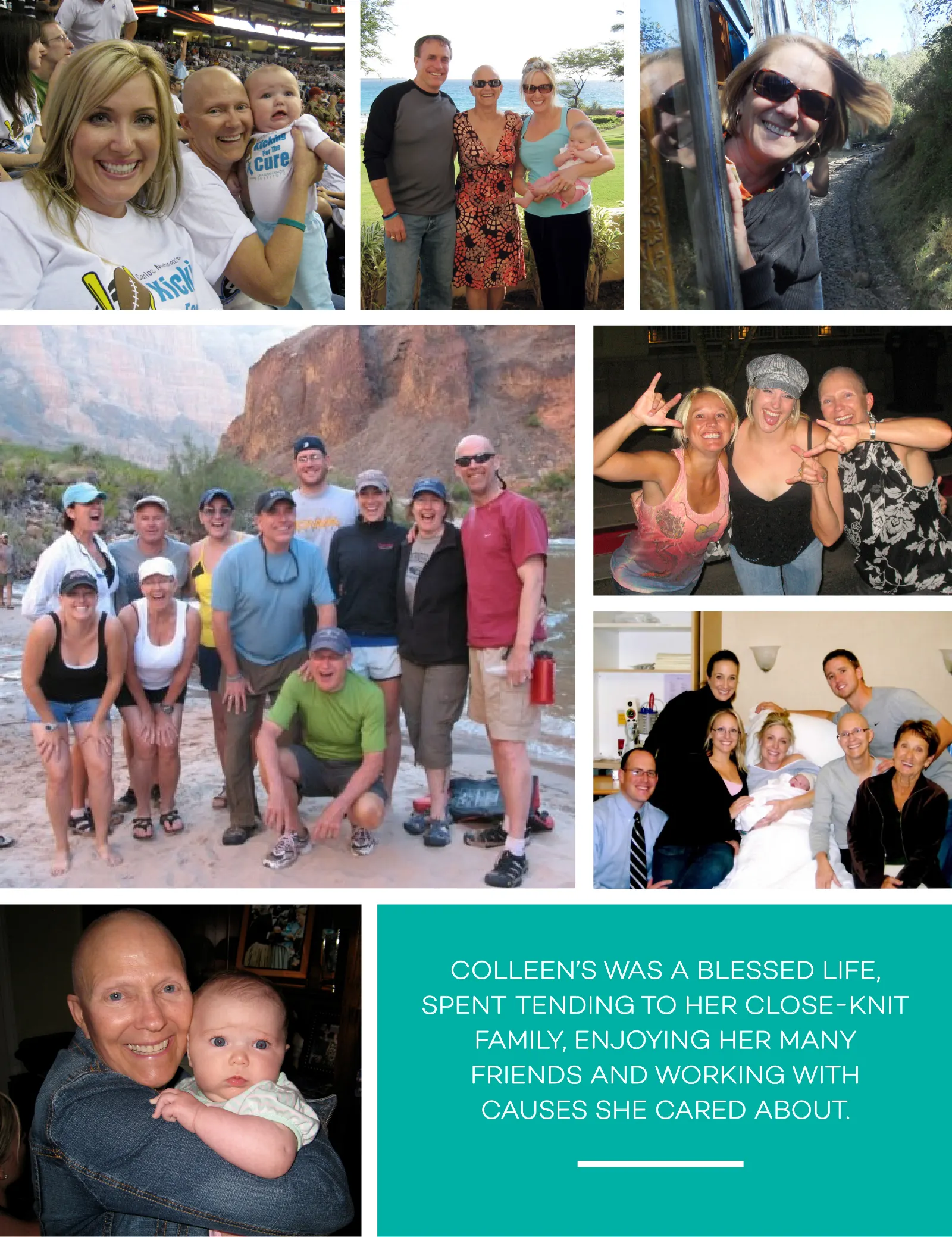
COLLEEN’S WAS A BLESSED LIFE, SPENT TENDING TO HER CLOSE-KNIT FAMILY, ENJOYING HER MANY FRIENDS AND WORKING WITH CAUSES SHE CARED ABOUT.