
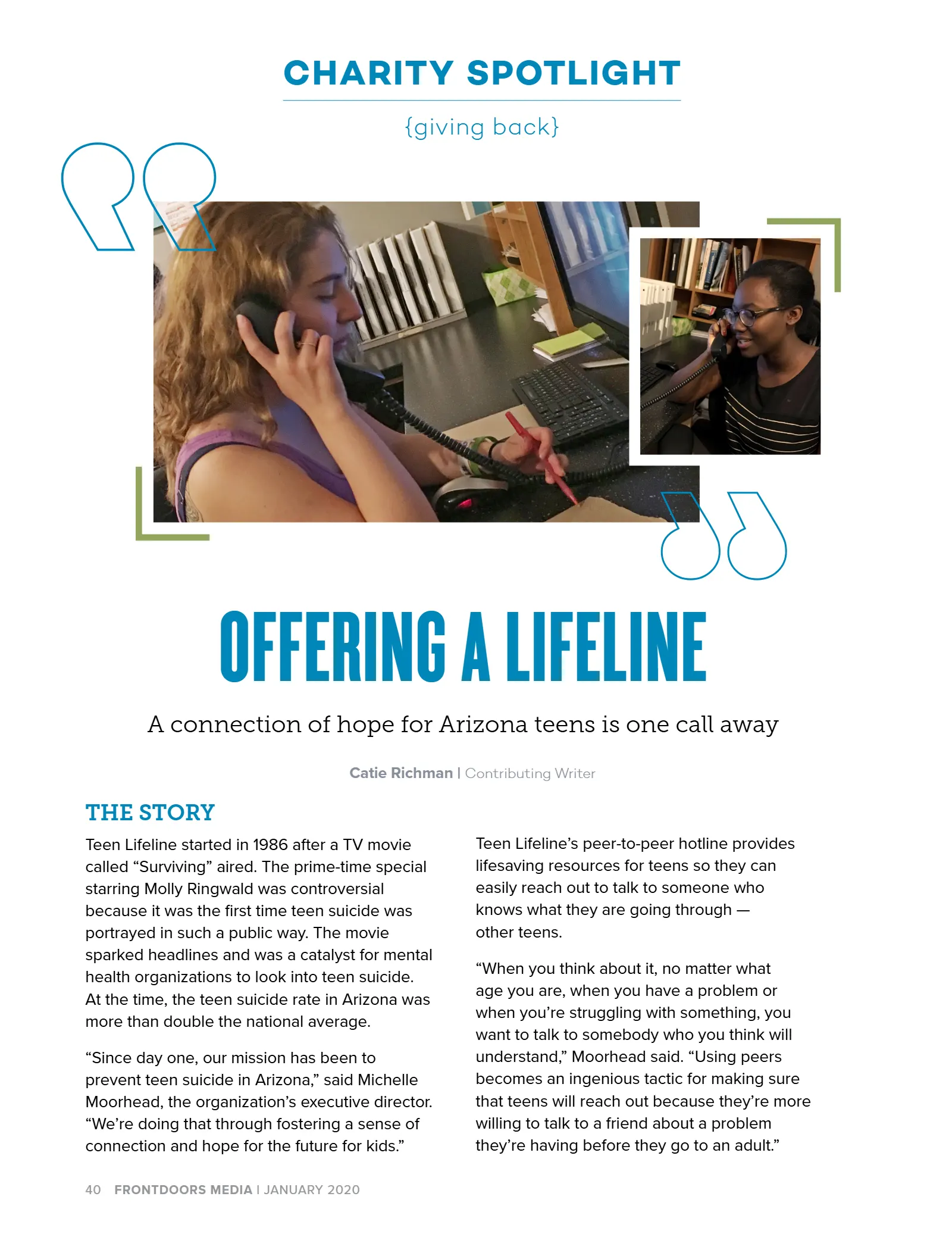
OFFERING A LIFELINE A connection of hope for Arizona teens is one call away Catie Richman | Contributing Writer THE STORY Teen Lifeline started in 1986 after a TV movie called “Surviving” aired. The prime-time special starring Molly Ringwald was controversial because it was the first time teen suicide was portrayed in such a public way. The movie sparked headlines and was a catalyst for mental health organizations to look into teen suicide. At the time, the teen suicide rate in Arizona was more than double the national average. “Since day one, our mission has been to prevent teen suicide in Arizona,” said Michelle Moorhead, the organization’s executive director. “We’re doing that through fostering a sense of connection and hope for the future for kids.” Teen Lifeline’s peer-to-peer hotline provides lifesaving resources for teens so they can easily reach out to talk to someone who knows what they are going through — other teens. “When you think about it, no matter what age you are, when you have a problem or when you’re struggling with something, you want to talk to somebody who you think will understand,” Moorhead said. “Using peers becomes an ingenious tactic for making sure that teens will reach out because they’re more willing to talk to a friend about a problem they’re having before they go to an adult.” 40 FRONTDOORS MEDIA | JANUARY 2020 CHARITY SPOTLIGHT {giving back}
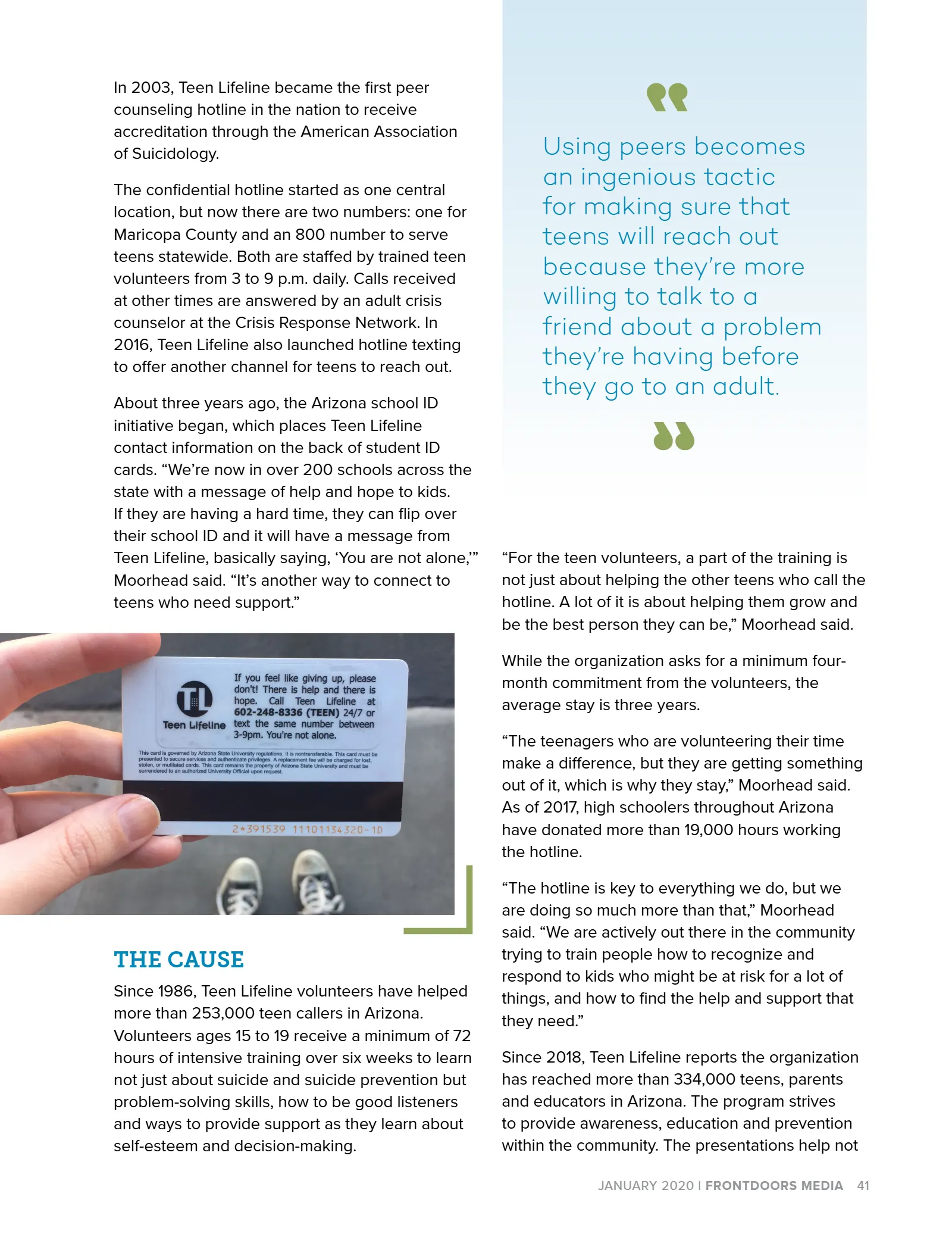
In 2003, Teen Lifeline became the first peer counseling hotline in the nation to receive accreditation through the American Association of Suicidology. The confidential hotline started as one central location, but now there are two numbers: one for Maricopa County and an 800 number to serve teens statewide. Both are staffed by trained teen volunteers from 3 to 9 p.m. daily. Calls received at other times are answered by an adult crisis counselor at the Crisis Response Network. In 2016, Teen Lifeline also launched hotline texting to offer another channel for teens to reach out. About three years ago, the Arizona school ID initiative began, which places Teen Lifeline contact information on the back of student ID cards. “We’re now in over 200 schools across the state with a message of help and hope to kids. If they are having a hard time, they can flip over their school ID and it will have a message from Teen Lifeline, basically saying, ‘You are not alone,’” Moorhead said. “It’s another way to connect to teens who need support.” JANUARY 2020 | FRONTDOORS MEDIA 41 ” “For the teen volunteers, a part of the training is not just about helping the other teens who call the hotline. A lot of it is about helping them grow and be the best person they can be,” Moorhead said. While the organization asks for a minimum four- month commitment from the volunteers, the average stay is three years. “The teenagers who are volunteering their time make a difference, but they are getting something out of it, which is why they stay,” Moorhead said. As of 2017, high schoolers throughout Arizona have donated more than 19,000 hours working the hotline. “The hotline is key to everything we do, but we are doing so much more than that,” Moorhead said. “We are actively out there in the community trying to train people how to recognize and respond to kids who might be at risk for a lot of things, and how to find the help and support that they need.” Since 2018, Teen Lifeline reports the organization has reached more than 334,000 teens, parents and educators in Arizona. The program strives to provide awareness, education and prevention within the community. The presentations help not Using peers becomes an ingenious tactic for making sure that teens will reach out because they’re more willing to talk to a friend about a problem they’re having before they go to an adult. “ THE CAUSE Since 1986, Teen Lifeline volunteers have helped more than 253,000 teen callers in Arizona. Volunteers ages 15 to 19 receive a minimum of 72 hours of intensive training over six weeks to learn not just about suicide and suicide prevention but problem-solving skills, how to be good listeners and ways to provide support as they learn about self-esteem and decision-making.