
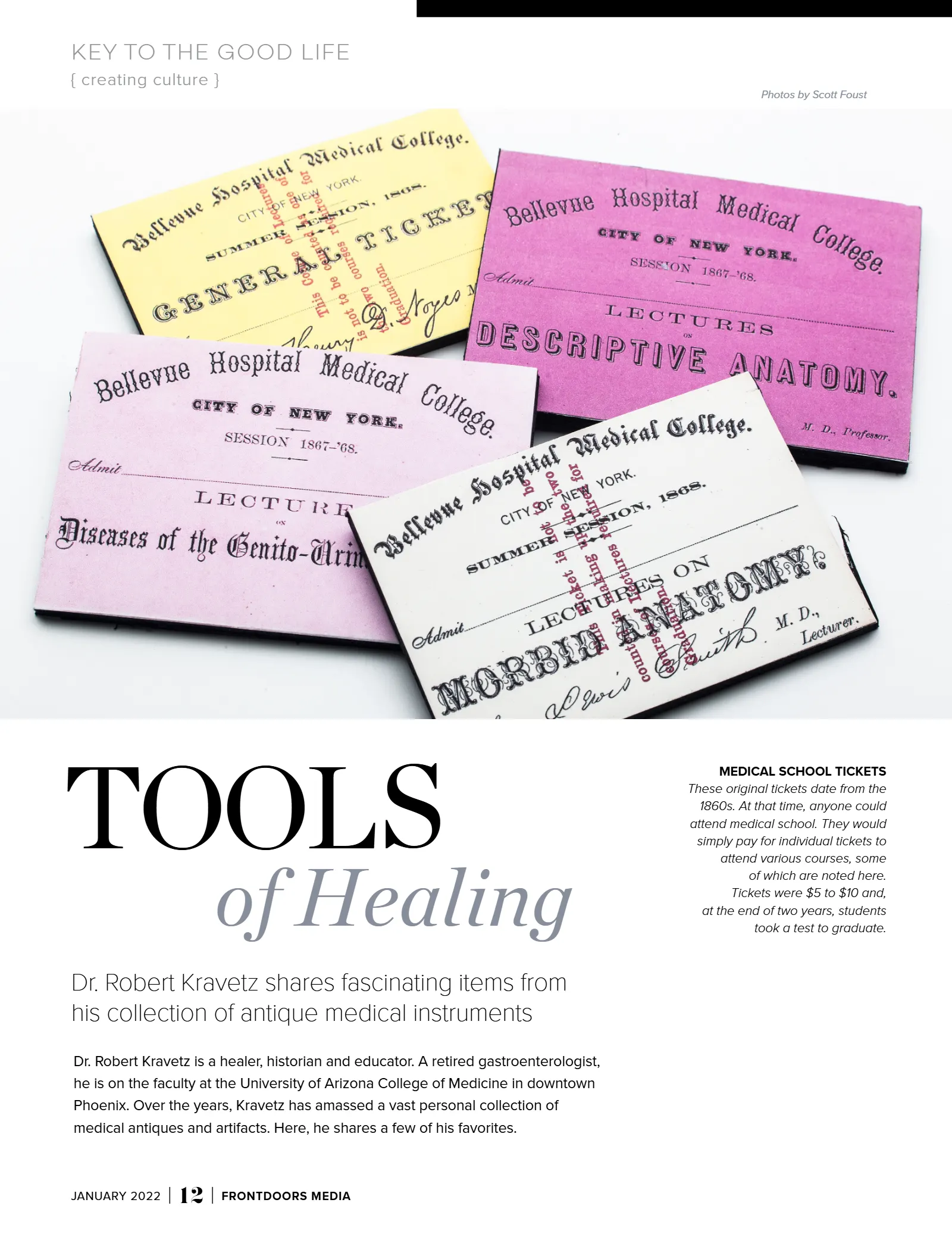
KEY TO THE GOOD LIFE { creating culture } Photos by Scott Foust Dr. Robert Kravetz is a healer, historian and educator. A retired gastroenterologist, he is on the faculty at the University of Arizona College of Medicine in downtown Phoenix. Over the years, Kravetz has amassed a vast personal collection of medical antiques and artifacts. Here, he shares a few of his favorites. Dr. Robert Kravetz shares fascinating items from his collection of antique medical instruments MEDICAL SCHOOL TICKETS These original tickets date from the 1860s. At that time, anyone could attend medical school. They would simply pay for individual tickets to attend various courses, some of which are noted here. Tickets were $5 to $10 and, at the end of two years, students took a test to graduate. JANUARY 2022 | 12 | FRONTDOORS MEDIA TOOL S of Healing
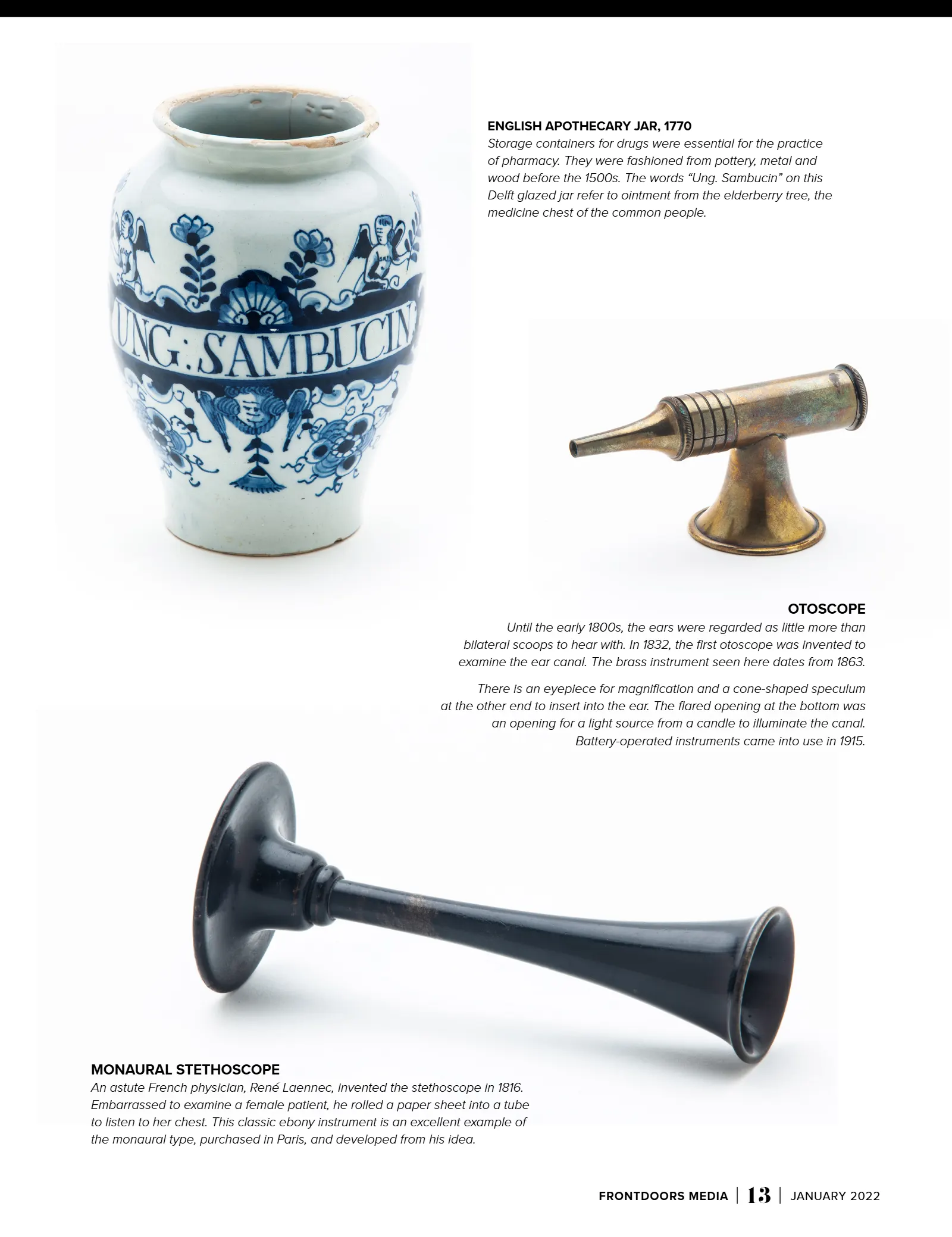
FRONTDOORS MEDIA | 13 | JANUARY 2022 MONAURAL STETHOSCOPE An astute French physician, René Laennec, invented the stethoscope in 1816. Embarrassed to examine a female patient, he rolled a paper sheet into a tube to listen to her chest. This classic ebony instrument is an excellent example of the monaural type, purchased in Paris, and developed from his idea. ENGLISH APOTHECARY JAR, 1770 Storage containers for drugs were essential for the practice of pharmacy. They were fashioned from pottery, metal and wood before the 1500s. The words “Ung. Sambucin” on this Delft glazed jar refer to ointment from the elderberry tree, the medicine chest of the common people. OTOSCOPE Until the early 1800s, the ears were regarded as little more than bilateral scoops to hear with. In 1832, the first otoscope was invented to examine the ear canal. The brass instrument seen here dates from 1863. There is an eyepiece for magnification and a cone-shaped speculum at the other end to insert into the ear. The flared opening at the bottom was an opening for a light source from a candle to illuminate the canal. Battery-operated instruments came into use in 1915.