
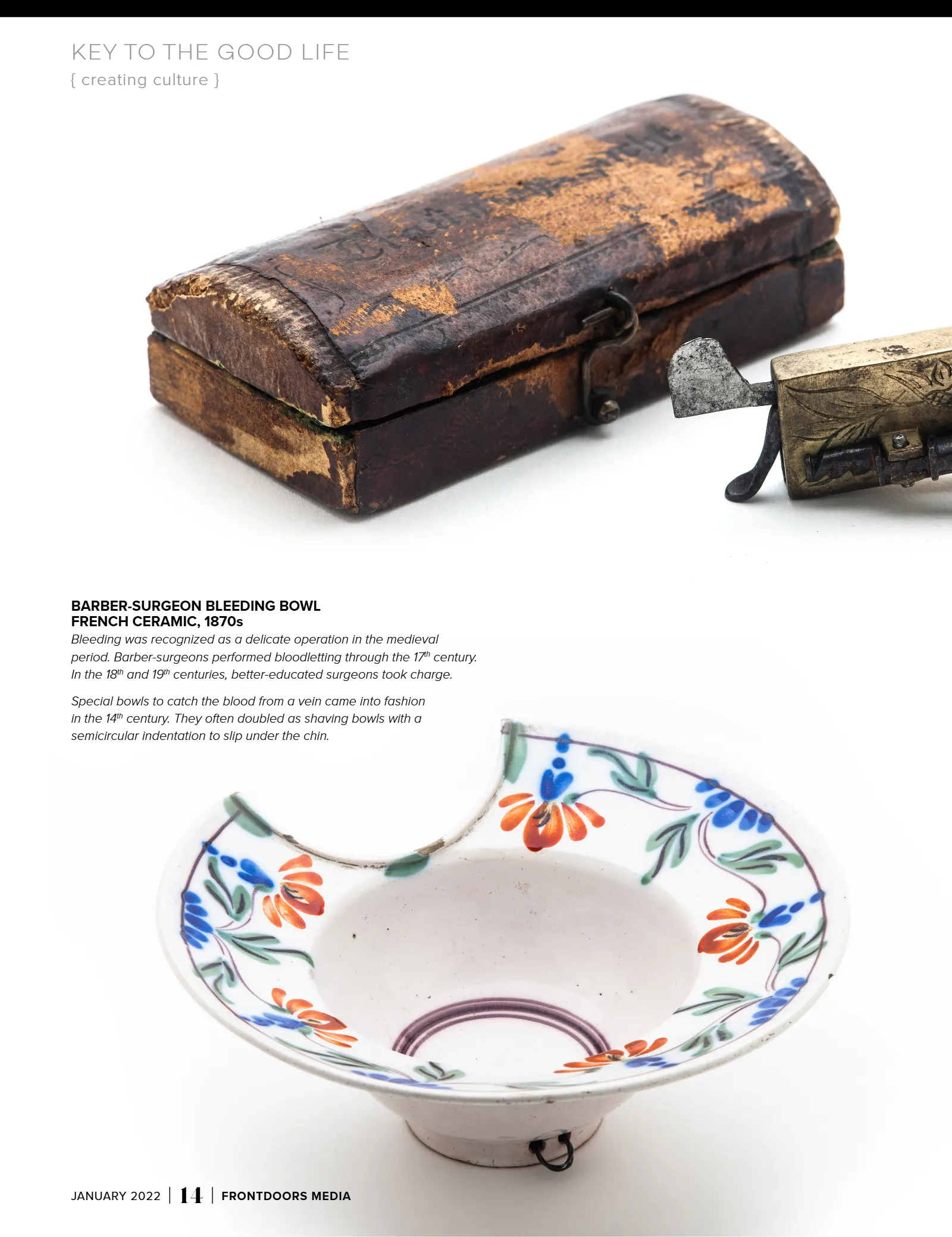

BARBER-SURGEON BLEEDING BOWL FRENCH CERAMIC, 1870s Bleeding was recognized as a delicate operation in the medieval period. Barber-surgeons performed bloodletting through the 17 th century. In the 18 th and 19 th centuries, better-educated surgeons took charge. Special bowls to catch the blood from a vein came into fashion in the 14 th century. They often doubled as shaving bowls with a semicircular indentation to slip under the chin. JANUARY 2022 | 14 | FRONTDOORS MEDIA KEY TO THE GOOD LIFE { creating culture }
SPRING LANCET The practice of bloodletting, or phlebotomy, dates to antiquity. Every known medical condition was treated by this method. It rarely benefited the patient, but at least everyone felt something was being done. This single-blade device was springloaded, and the blade released when the trigger was pressed. It dates from the early 17 th century. The case top is inscribed “Traumihsticht,” which translates to “Watch out, it sticks.” DRUG MORTAR Made from a variety of materials over the ages, the mortar and pestle were the first tools used to grind and make medicines from herbs. This early 16 th -century brass mortar is highly prized by collectors because of its rarity. The pestle has been lost. You can see more of Dr. Kravetz’s collection at UArizona College of Medicine in Phoenix, the Abrazo Central Campus, and Maricopa County Medical Society.