
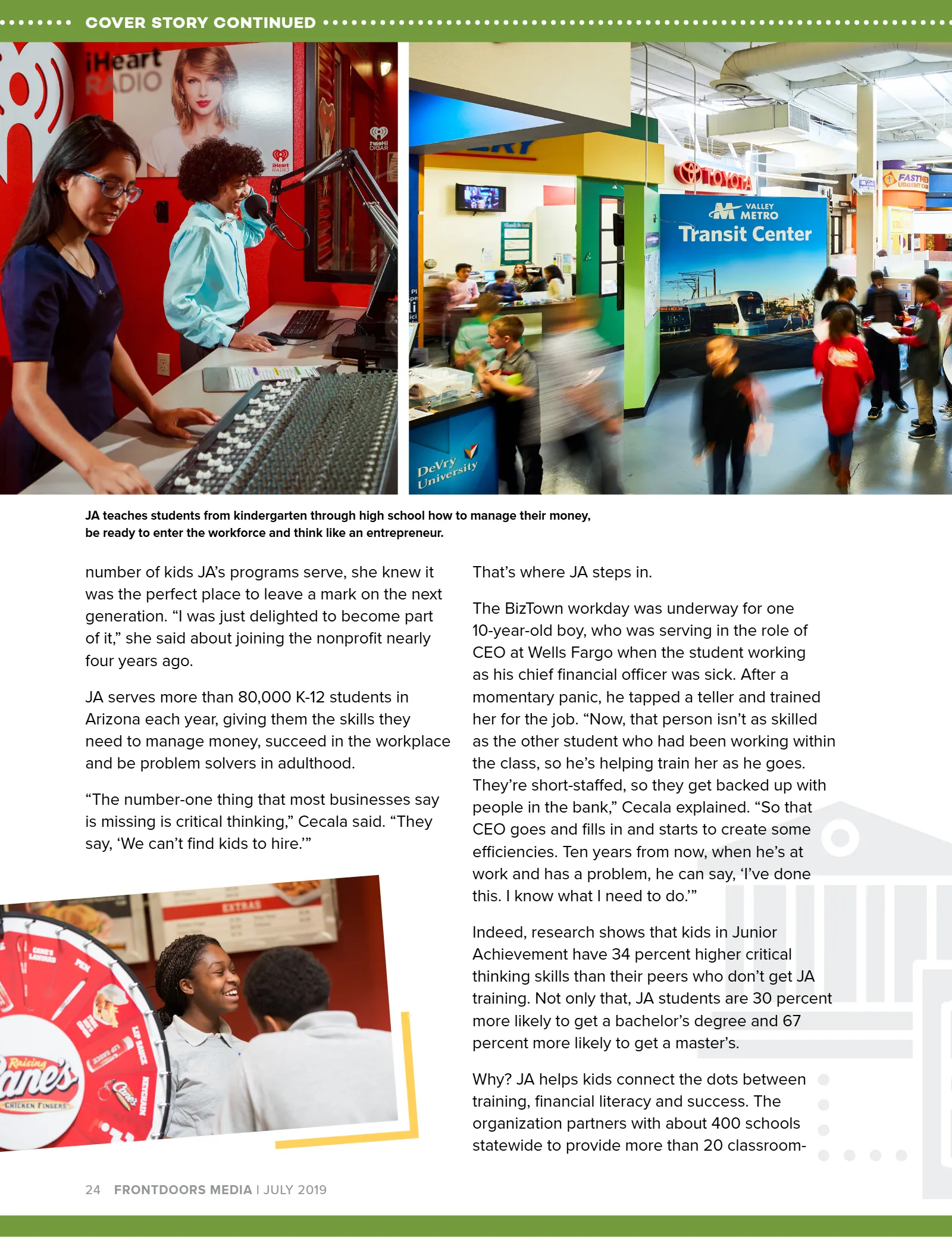
number of kids JA’s programs serve, she knew it was the perfect place to leave a mark on the next generation. “I was just delighted to become part of it,” she said about joining the nonprofit nearly four years ago. JA serves more than 80,000 K-12 students in Arizona each year, giving them the skills they need to manage money, succeed in the workplace and be problem solvers in adulthood. “The number-one thing that most businesses say is missing is critical thinking,” Cecala said. “They say, ‘We can’t find kids to hire.’” That’s where JA steps in. The BizTown workday was underway for one 10-year-old boy, who was serving in the role of CEO at Wells Fargo when the student working as his chief financial officer was sick. After a momentary panic, he tapped a teller and trained her for the job. “Now, that person isn’t as skilled as the other student who had been working within the class, so he’s helping train her as he goes. They’re short-staffed, so they get backed up with people in the bank,” Cecala explained. “So that CEO goes and fills in and starts to create some efficiencies. Ten years from now, when he’s at work and has a problem, he can say, ‘I’ve done this. I know what I need to do.’” Indeed, research shows that kids in Junior Achievement have 34 percent higher critical thinking skills than their peers who don’t get JA training. Not only that, JA students are 30 percent more likely to get a bachelor’s degree and 67 percent more likely to get a master’s. Why? JA helps kids connect the dots between training, financial literacy and success. The organization partners with about 400 schools statewide to provide more than 20 classroom- JA teaches students from kindergarten through high school how to manage their money, be ready to enter the workforce and think like an entrepreneur. 24 FRONTDOORS MEDIA | JULY 2019 COVER STORY CONTINUED
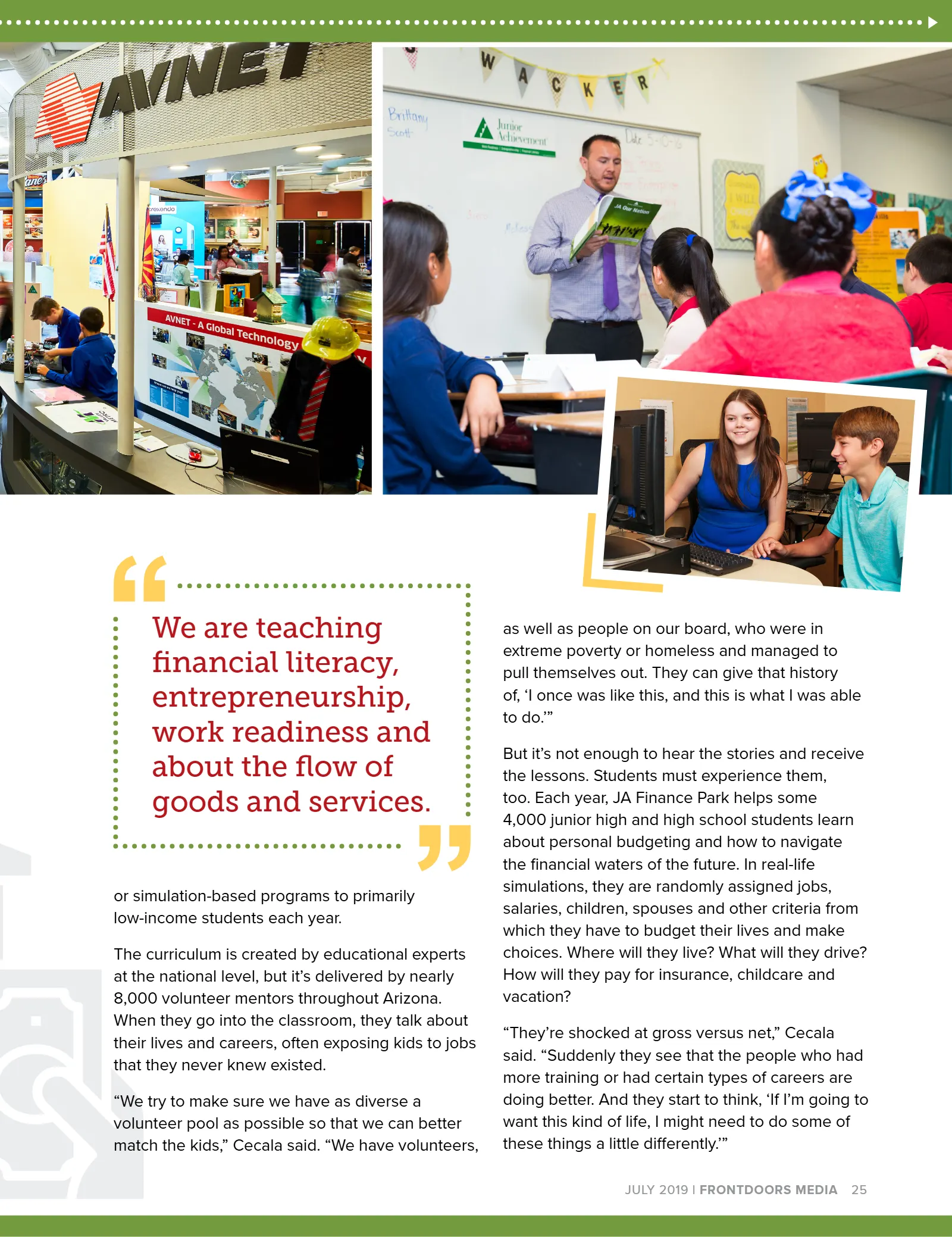
as well as people on our board, who were in extreme poverty or homeless and managed to pull themselves out. They can give that history of, ‘I once was like this, and this is what I was able to do.’” But it’s not enough to hear the stories and receive the lessons. Students must experience them, too. Each year, JA Finance Park helps some 4,000 junior high and high school students learn about personal budgeting and how to navigate the financial waters of the future. In real-life simulations, they are randomly assigned jobs, salaries, children, spouses and other criteria from which they have to budget their lives and make choices. Where will they live? What will they drive? How will they pay for insurance, childcare and vacation? “They’re shocked at gross versus net,” Cecala said. “Suddenly they see that the people who had more training or had certain types of careers are doing better. And they start to think, ‘If I’m going to want this kind of life, I might need to do some of these things a little differently.’” or simulation-based programs to primarily low-income students each year. The curriculum is created by educational experts at the national level, but it’s delivered by nearly 8,000 volunteer mentors throughout Arizona. When they go into the classroom, they talk about their lives and careers, often exposing kids to jobs that they never knew existed. “We try to make sure we have as diverse a volunteer pool as possible so that we can better match the kids,” Cecala said. “We have volunteers, We are teaching financial literacy, entrepreneurship, work readiness and about the flow of goods and services. JULY 2019 | FRONTDOORS MEDIA 25