
JUNE 2017 14 | FRONTDOORSMEDIA .COM another way to get platelets up to Flagstaff,” said Brian Beach, hospital services manager at United Blood Services who works with Flights for Life to coordinate all the deliveries. “They’re not only for scheduled missions. If we get a stat right now to Show Low, we’ll put out a page to all of the pilots and someone will respond, weather permitting. Obviously it’s a lot quicker for us to fly up there than it is to drive.” Beach said Flights for Life saves United Blood Services about $1 million every three years. The platelet flight such as the one Smith made to Flagstaff happens every day, Beach said. “What he has in that box can pretty much handle everything in the region,” he said. “The platelets stay at the Flagstaff Medical Center but if the other hospitals need them we have a carrier service.” Getting the blood where it needs to be, as soon as possible, is a constant logistical dance for United Blood Services. “In the outlying areas we’re putting product on their shelf and we do it strategically,” Beach said. Smaller hospitals in Yuma, Page, Show Low and Winslow need platelets and rely in United Blood Services to make sure they have them. Beach coordinates the flight missions to Flagstaff, Yuma and other outlying areas. Every month, the volunteer pilots sign up for their missions and Beach schedules them quickly and according to need. “When we have a stat, to us that’s when they really shine,” he said of the Flights for Life volunteer pilots. “Obviously, it’d take us four hours to get to Show Low. They can fly over the mountains in a half hour. So it’s incredible to have them.” The pilots “love to fly and they like to do something that’s good for the community,” he said. That’s a sentiment contained in the words of Flights for Life’s founding president, Ed Gentry, who said the group was formed was because pilots “wanted to do something more important with their planes than poke holes in the sky.” Beach said that before Flights for Life, pilots used to say that they flew their planes for “a $100 hamburger,” meaning that they would spend $100 in fuel just to go somewhere — Flagstaff, or maybe Yuma — to grab a hamburger for lunch. Now, they may still get a hamburger, but because they’re also carrying blood, their flights have acquired a whole new meaning. “They’re doing something important,” Beach said. And it’s getting noticed. Flights for Life units are being established in New Mexico and Texas. There is a request for Flights for Life in California and Nevada. They have also received calls from pilots from Alaska and Tennessee saying they too want to help out. Sue Thew, a spokeswoman for United Blood Services who has been with the nonprofit for 30 years, said the role the Flights for Life pilots play is crucial because blood picked up from blood drives in outlying locations needs to be processed within eight hours after donation in order to get plasma. The clock begins ticking as soon as the blood leaves the donor. It may have to COVER STORY CONTINUED
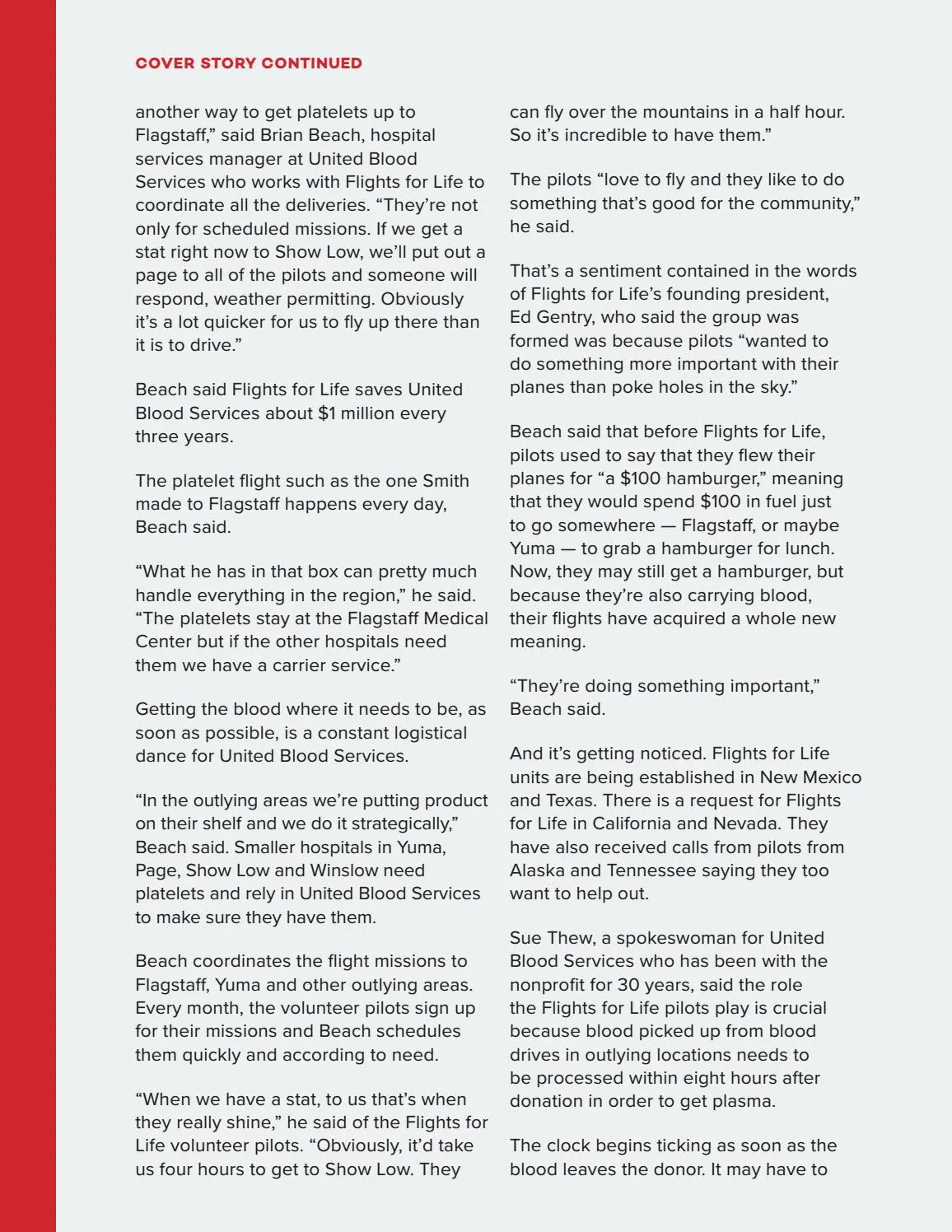
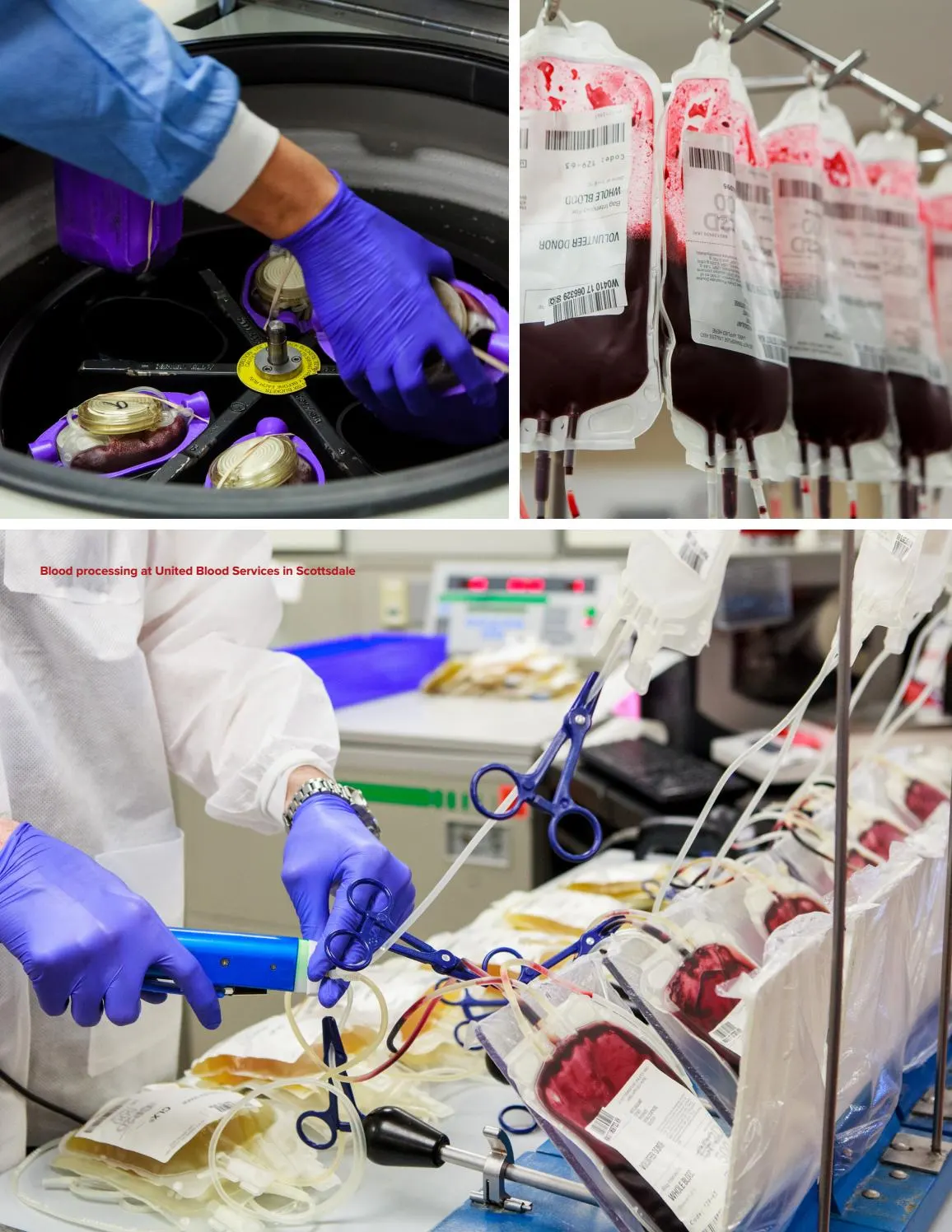
JUNE 2017 FRONTDOORSMEDIA .COM | 15 Blood processing at United Blood Services in Scottsdale