
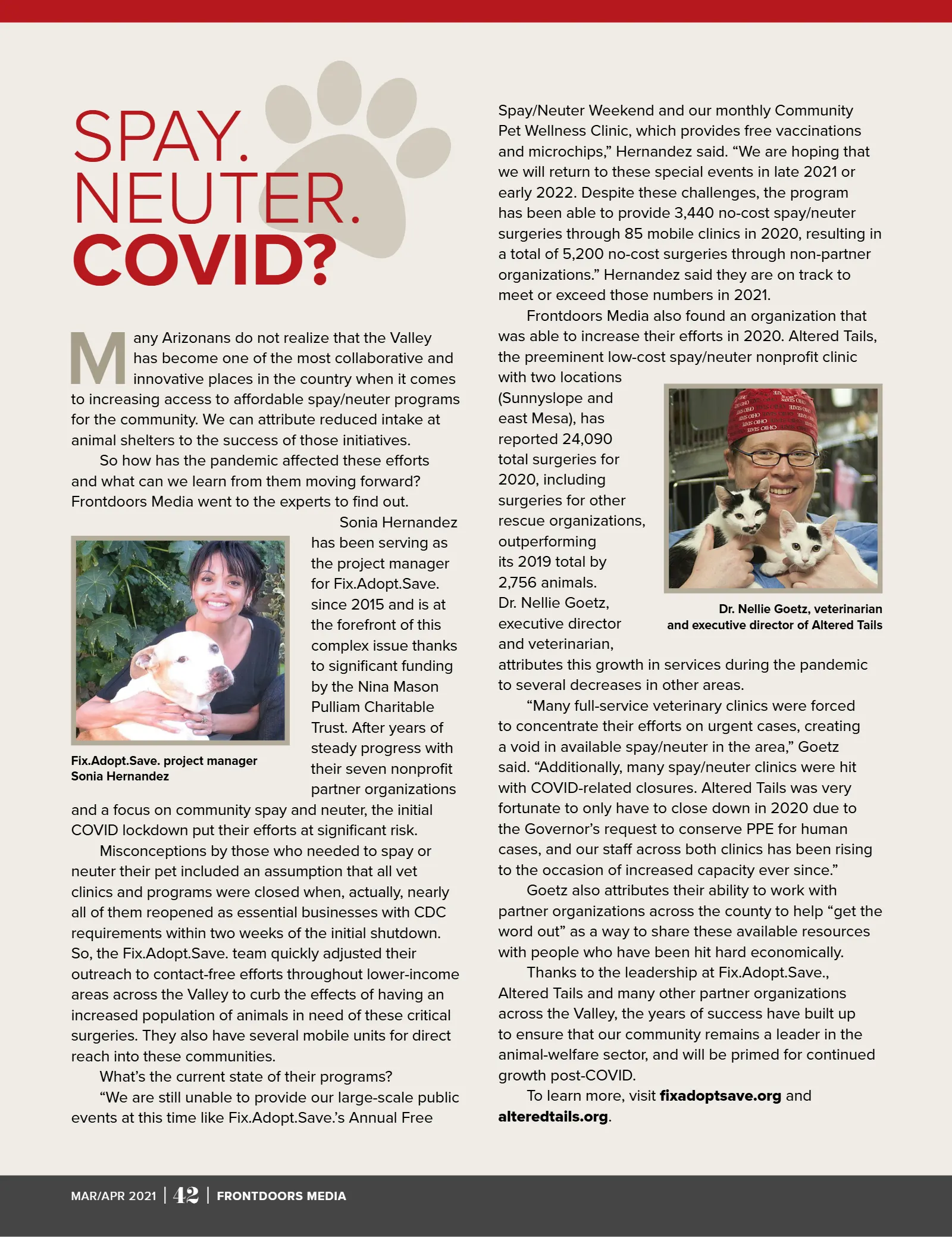
Fix.Adopt.Save. project manager Sonia Hernandez M any Arizonans do not realize that the Valley has become one of the most collaborative and innovative places in the country when it comes to increasing access to affordable spay/neuter programs for the community. We can attribute reduced intake at animal shelters to the success of those initiatives. So how has the pandemic affected these efforts and what can we learn from them moving forward? Frontdoors Media went to the experts to find out. Sonia Hernandez has been serving as the project manager for Fix.Adopt.Save. since 2015 and is at the forefront of this complex issue thanks to significant funding by the Nina Mason Pulliam Charitable Trust. After years of steady progress with their seven nonprofit partner organizations and a focus on community spay and neuter, the initial COVID lockdown put their efforts at significant risk. Misconceptions by those who needed to spay or neuter their pet included an assumption that all vet clinics and programs were closed when, actually, nearly all of them reopened as essential businesses with CDC requirements within two weeks of the initial shutdown. So, the Fix.Adopt.Save. team quickly adjusted their outreach to contact-free efforts throughout lower-income areas across the Valley to curb the effects of having an increased population of animals in need of these critical surgeries. They also have several mobile units for direct reach into these communities. What’s the current state of their programs? “We are still unable to provide our large-scale public events at this time like Fix.Adopt.Save.’s Annual Free Spay/Neuter Weekend and our monthly Community Pet Wellness Clinic, which provides free vaccinations and microchips,” Hernandez said. “We are hoping that we will return to these special events in late 2021 or early 2022. Despite these challenges, the program has been able to provide 3,440 no-cost spay/neuter surgeries through 85 mobile clinics in 2020, resulting in a total of 5,200 no-cost surgeries through non-partner organizations.” Hernandez said they are on track to meet or exceed those numbers in 2021. Frontdoors Media also found an organization that was able to increase their efforts in 2020. Altered Tails, the preeminent low-cost spay/neuter nonprofit clinic with two locations (Sunnyslope and east Mesa), has reported 24,090 total surgeries for 2020, including surgeries for other rescue organizations, outperforming its 2019 total by 2,756 animals. Dr. Nellie Goetz, executive director and veterinarian, attributes this growth in services during the pandemic to several decreases in other areas. “Many full-service veterinary clinics were forced to concentrate their efforts on urgent cases, creating a void in available spay/neuter in the area,” Goetz said. “Additionally, many spay/neuter clinics were hit with COVID-related closures. Altered Tails was very fortunate to only have to close down in 2020 due to the Governor’s request to conserve PPE for human cases, and our staff across both clinics has been rising to the occasion of increased capacity ever since.” Goetz also attributes their ability to work with partner organizations across the county to help “get the word out” as a way to share these available resources with people who have been hit hard economically. Thanks to the leadership at Fix.Adopt.Save., Altered Tails and many other partner organizations across the Valley, the years of success have built up to ensure that our community remains a leader in the animal-welfare sector, and will be primed for continued growth post-COVID. To learn more, visit fixadoptsave.org and alteredtails.org . SPAY. NEUTER. COVID? Dr. Nellie Goetz, veterinarian and executive director of Altered Tails MAR/APR 2021 | 42 | FRONTDOORS MEDIA
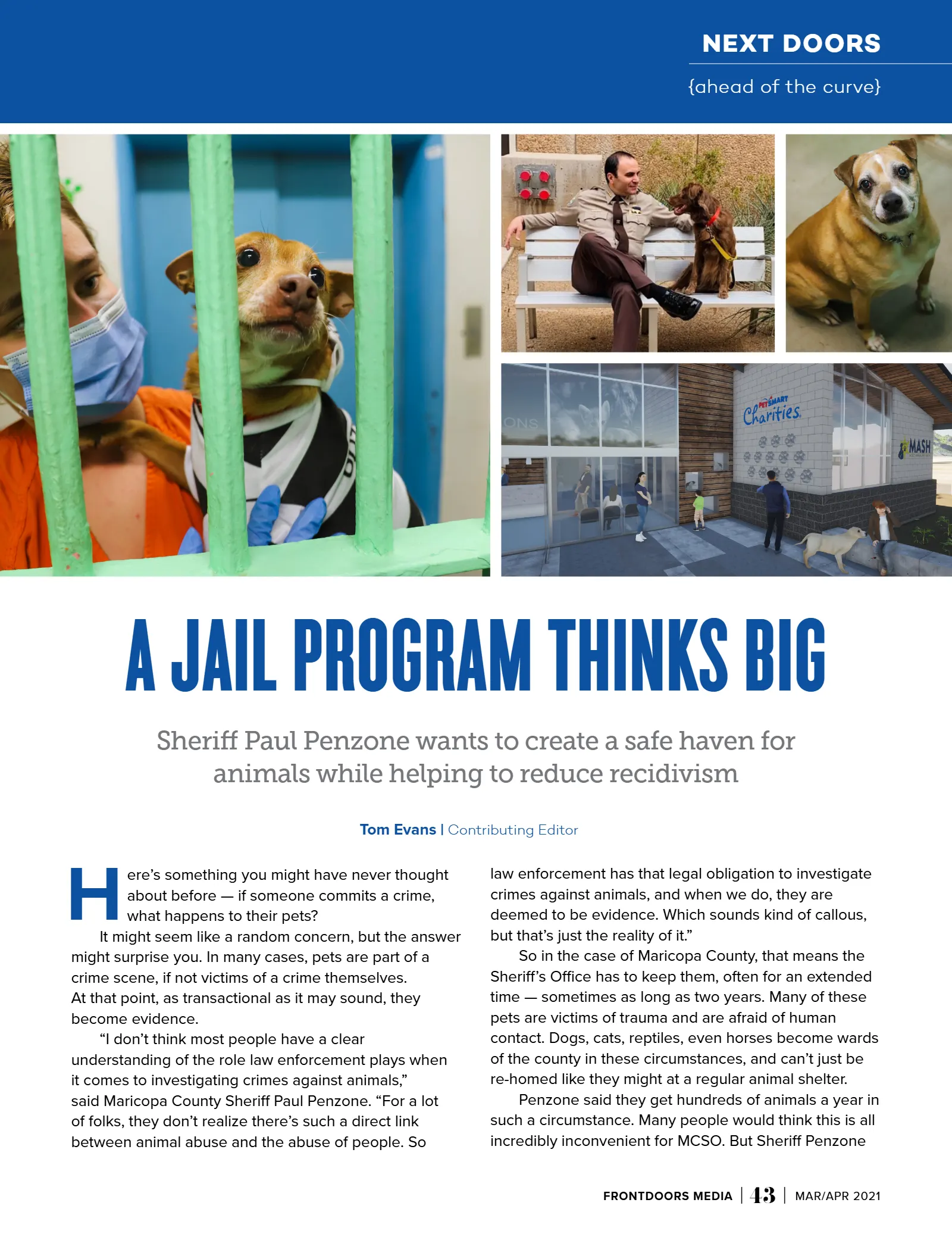
H ere’s something you might have never thought about before — if someone commits a crime, what happens to their pets? It might seem like a random concern, but the answer might surprise you. In many cases, pets are part of a crime scene, if not victims of a crime themselves. At that point, as transactional as it may sound, they become evidence. “I don’t think most people have a clear understanding of the role law enforcement plays when it comes to investigating crimes against animals,” said Maricopa County Sheriff Paul Penzone. “For a lot of folks, they don’t realize there’s such a direct link between animal abuse and the abuse of people. So law enforcement has that legal obligation to investigate crimes against animals, and when we do, they are deemed to be evidence. Which sounds kind of callous, but that’s just the reality of it.” So in the case of Maricopa County, that means the Sheriff’s Office has to keep them, often for an extended time — sometimes as long as two years. Many of these pets are victims of trauma and are afraid of human contact. Dogs, cats, reptiles, even horses become wards of the county in these circumstances, and can’t just be re-homed like they might at a regular animal shelter. Penzone said they get hundreds of animals a year in such a circumstance. Many people would think this is all incredibly inconvenient for MCSO. But Sheriff Penzone Sheriff Paul Penzone wants to create a safe haven for animals while helping to reduce recidivism Tom Evans | Contributing Editor A JAIL PROGRAM THINKS BIG FRONTDOORS MEDIA | 43 | MAR/APR 2021 NEXT DOORS {ahead of the curve}