
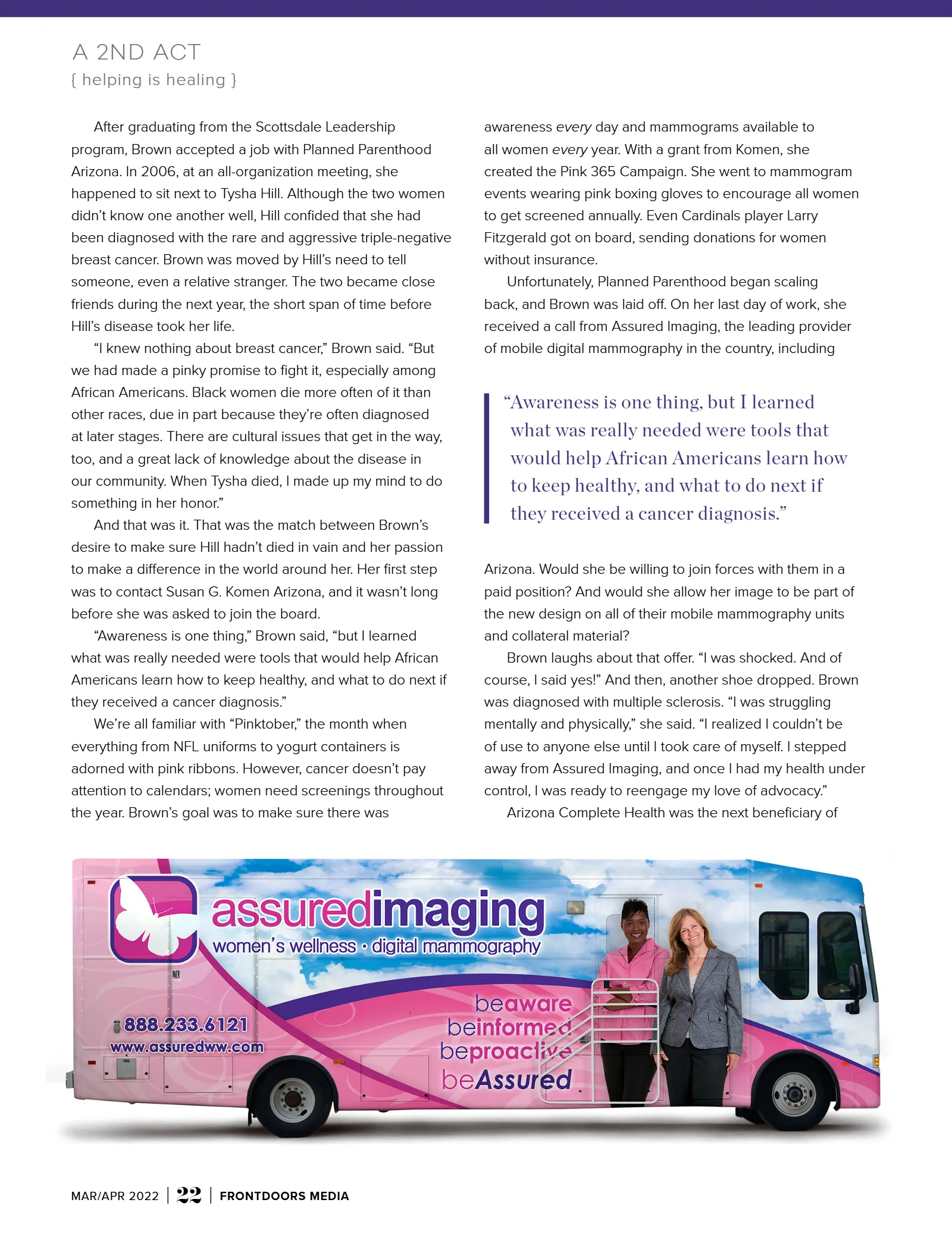
After graduating from the Scottsdale Leadership program, Brown accepted a job with Planned Parenthood Arizona. In 2006, at an all-organization meeting, she happened to sit next to Tysha Hill. Although the two women didn’t know one another well, Hill confided that she had been diagnosed with the rare and aggressive triple-negative breast cancer. Brown was moved by Hill’s need to tell someone, even a relative stranger. The two became close friends during the next year, the short span of time before Hill’s disease took her life. “I knew nothing about breast cancer,” Brown said. “But we had made a pinky promise to fight it, especially among African Americans. Black women die more often of it than other races, due in part because they’re often diagnosed at later stages. There are cultural issues that get in the way, too, and a great lack of knowledge about the disease in our community. When Tysha died, I made up my mind to do something in her honor.” And that was it. That was the match between Brown’s desire to make sure Hill hadn’t died in vain and her passion to make a difference in the world around her. Her first step was to contact Susan G. Komen Arizona, and it wasn’t long before she was asked to join the board. “Awareness is one thing,” Brown said, “but I learned what was really needed were tools that would help African Americans learn how to keep healthy, and what to do next if they received a cancer diagnosis.” We’re all familiar with “Pinktober,” the month when everything from NFL uniforms to yogurt containers is adorned with pink ribbons. However, cancer doesn’t pay attention to calendars; women need screenings throughout the year. Brown’s goal was to make sure there was A 2ND ACT { helping is healing } awareness every day and mammograms available to all women every year. With a grant from Komen, she created the Pink 365 Campaign. She went to mammogram events wearing pink boxing gloves to encourage all women to get screened annually. Even Cardinals player Larry Fitzgerald got on board, sending donations for women without insurance. Unfortunately, Planned Parenthood began scaling back, and Brown was laid off. On her last day of work, she received a call from Assured Imaging, the leading provider of mobile digital mammography in the country, including Arizona. Would she be willing to join forces with them in a paid position? And would she allow her image to be part of the new design on all of their mobile mammography units and collateral material? Brown laughs about that offer. “I was shocked. And of course, I said yes!” And then, another shoe dropped. Brown was diagnosed with multiple sclerosis. “I was struggling mentally and physically,” she said. “I realized I couldn’t be of use to anyone else until I took care of myself. I stepped away from Assured Imaging, and once I had my health under control, I was ready to reengage my love of advocacy.” Arizona Complete Health was the next beneficiary of “ Awareness is one thing, but I learned what was really needed were tools that would help African Americans learn how to keep healthy, and what to do next if they received a cancer diagnosis.” MAR/APR 2022 | 22 | FRONTDOORS MEDIA
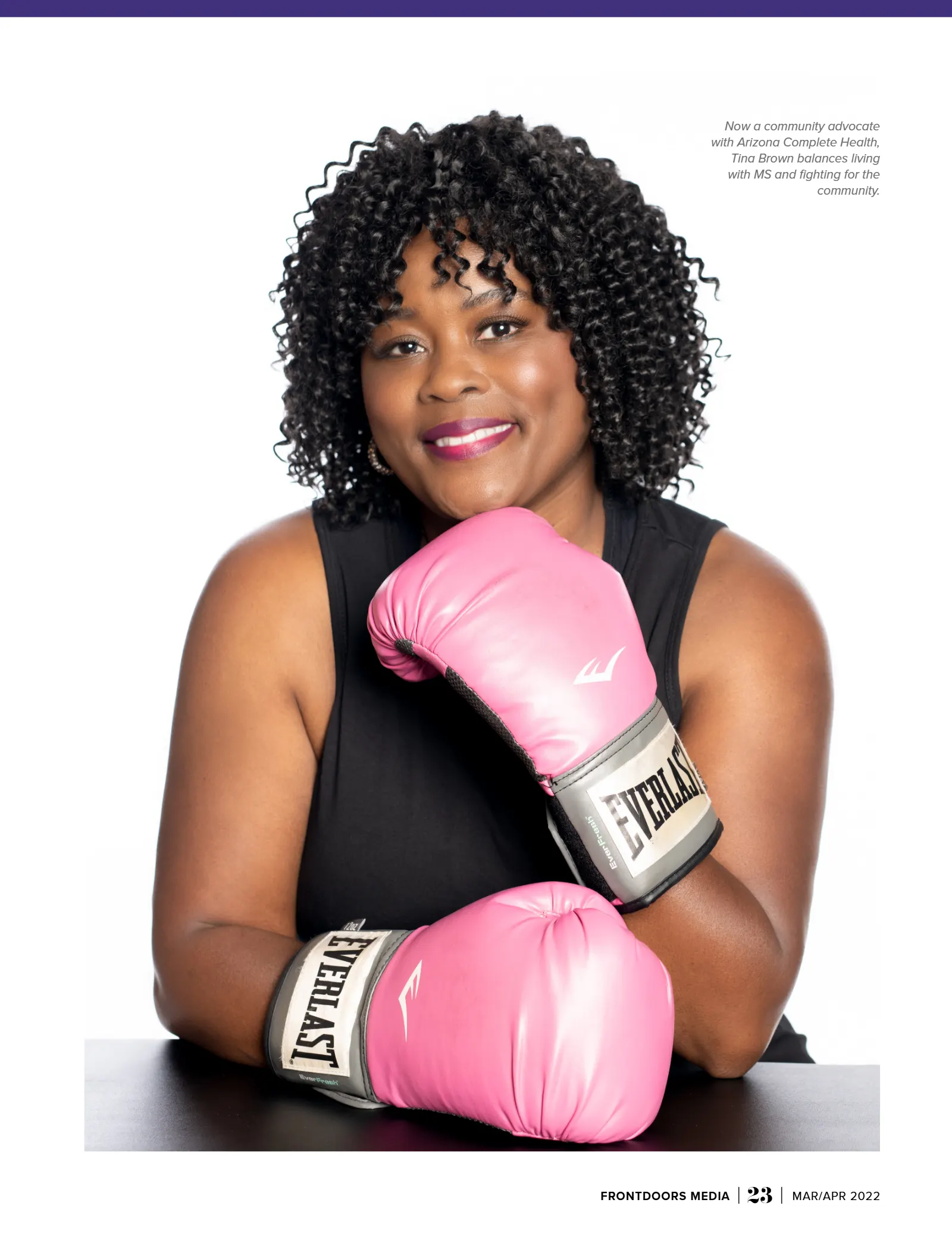
Now a community advocate with Arizona Complete Health, Tina Brown balances living with MS and fighting for the community. FRONTDOORS MEDIA | 23 | MAR/APR 2022