
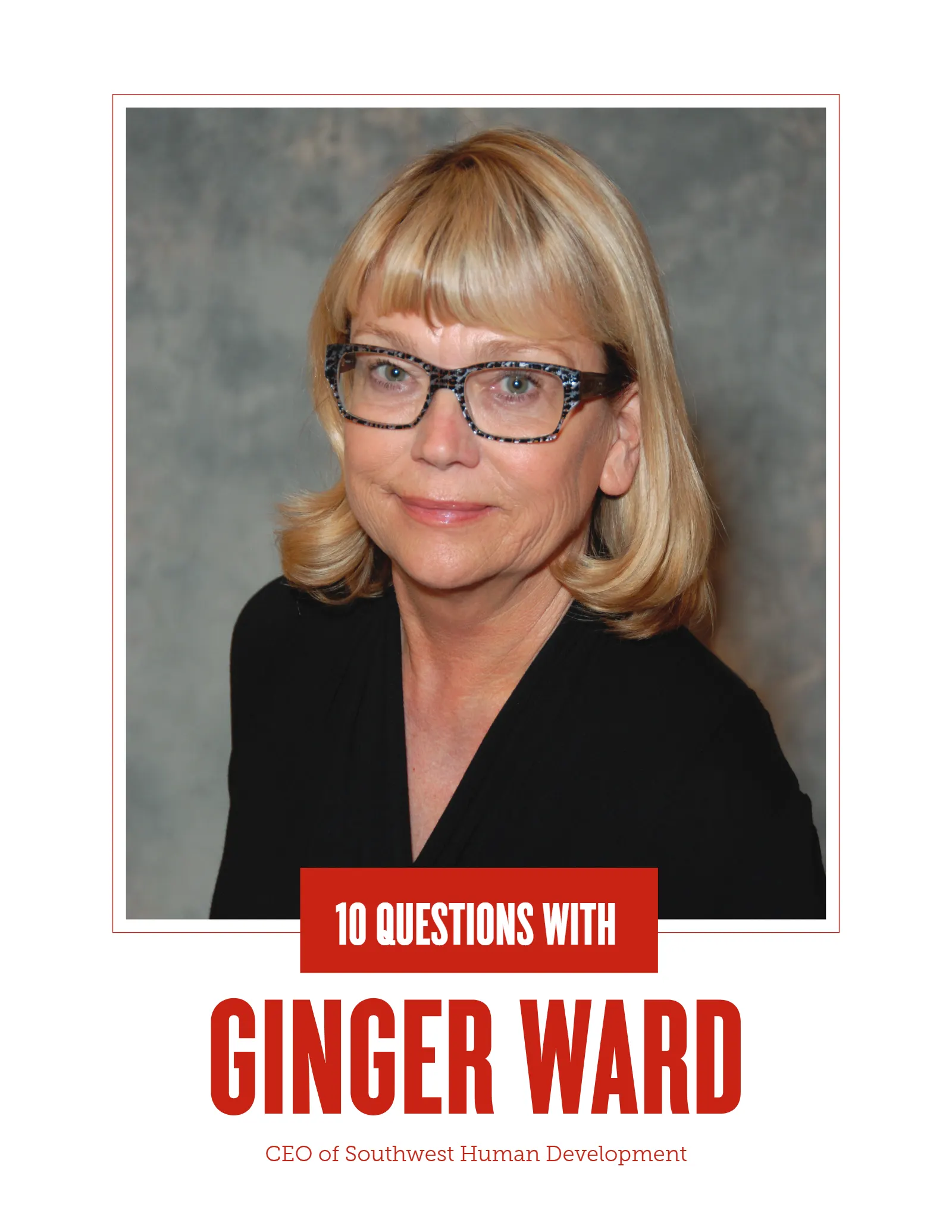
22 FRONTDOORS MEDIA | MAY 2018 GINGER WARD 10 QUESTIONS WITH CEO of Southwest Human Development
MAY 2018 | FRONTDOORS MEDIA 23 1. TELL US ABOUT SOUTHWEST HUMAN DEVELOPMENT AND THE WORK IT’S DOING IN THE COMMUNITY. Southwest Human Development is Arizona’s largest nonprofit dedicated to early childhood development, and it’s one of the largest in the nation. We know that early experiences matter. What we see and hear as young children sets a course for a lifelong process of discovery of ourselves and of the world around us. The investments we make today in young children provide an important foundation for their development. 2. DEFINE “EARLY CHILDHOOD EDUCATION” AND THE AGES IT INCLUDES. Early childhood education encompasses all of the learning that children experience in their earliest years, specifically ages 0 to 5, before they enter kindergarten. Science has documented that our earliest days, weeks, months and years of life are an important period of growth and development. Early learning experiences can occur in a variety of settings, ranging from one of our Head Start classrooms, to families’ own homes, through children’s interactions with their parents and caregivers in order to promote their cognitive, social and emotional development. 3. WHY IS THIS PERIOD SO IMPORTANT IN A CHILD’S DEVELOPMENT? We place a special focus on children’s earliest years, from birth to age 5, because we know that these critical years have a profound impact on their ability to enter kindergarten ready to learn and lead successful lives. Research and science show that the first years of a child’s life are an important time for building relationships and having meaningful experiences to best support their brain development, growth and early learning. As children, health and development are directly influenced by the quality of care and experiences they have with parents and other caregivers. 4. WHAT SHOULD PARENTS LOOK FOR IN A QUALITY EARLY CHILDHOOD PROGRAM? One of our programs in partnership with First Things First is called Quality First, which partners with child care and preschool providers to improve the quality of early learning across Arizona. Through this program, we’re able to support teachers and staff so they can ensure that child care and preschool settings promote learning in the best ways possible. These environments should include teachers who have strong skills working with infants, toddlers and preschoolers, feature learning environments that nurture the emotional, social, language and cognitive development of children, and encourage positive, consistent relationships that give young children the individual attention they need. 5. WHAT ARE SOME OF THE KEY AREAS THAT EARLY CHILDHOOD EDUCATORS FOCUS ON? Early communication, language and literacy development are fundamental to any early childhood development program to encourage later academic success. Language is key for children to make sense of the world and form relationships with others. These core components of early learning lay the foundation for high-quality interactions with parents and caregivers that help the brain grow and develop, and are a gateway to high-quality learning experiences, especially for children under age 3. 6. SOUTHWEST HUMAN DEVELOPMENT HAS MORE THAN 40 PROGRAMS OVERALL. WHAT ARE SOME OF THE AREAS COVERED, BESIDES PROGRAMS SUCH AS HEAD START? A unique part of Southwest Human Development is that we don’t simply focus on one area of early childhood. We know that comprehensive, high- quality services most benefit the children and families we work with each and every day. Our programs and services cover the wide-ranging breadth of early childhood, including child development, mental health, disabilities services, early education, literacy, family support and child welfare, professional development and training for those who work with young children, and more. 7. WHAT SORT OF EARLY LITERACY EFFORTS DOES SOUTHWEST HUMAN DEVELOPMENT PROVIDE? We incorporate early language and literacy development into each of our 40 programs and