
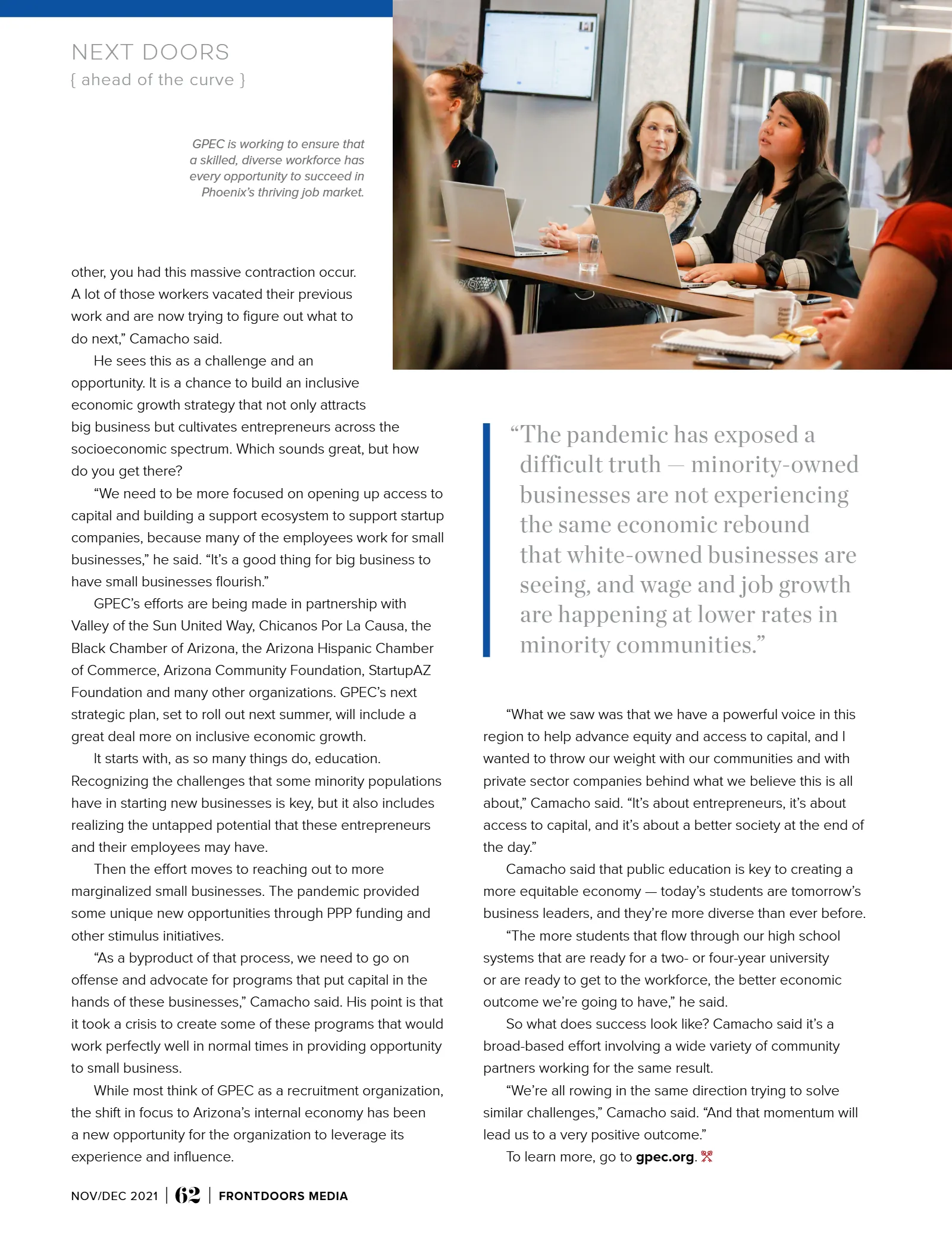
NEXT DOORS { ahead of the curve } other, you had this massive contraction occur. A lot of those workers vacated their previous work and are now trying to figure out what to do next,” Camacho said. He sees this as a challenge and an opportunity. It is a chance to build an inclusive economic growth strategy that not only attracts big business but cultivates entrepreneurs across the socioeconomic spectrum. Which sounds great, but how do you get there? “We need to be more focused on opening up access to capital and building a support ecosystem to support startup companies, because many of the employees work for small businesses,” he said. “It’s a good thing for big business to have small businesses flourish.” GPEC’s efforts are being made in partnership with Valley of the Sun United Way, Chicanos Por La Causa, the Black Chamber of Arizona, the Arizona Hispanic Chamber of Commerce, Arizona Community Foundation, StartupAZ Foundation and many other organizations. GPEC’s next strategic plan, set to roll out next summer, will include a great deal more on inclusive economic growth. It starts with, as so many things do, education. Recognizing the challenges that some minority populations have in starting new businesses is key, but it also includes realizing the untapped potential that these entrepreneurs and their employees may have. Then the effort moves to reaching out to more marginalized small businesses. The pandemic provided some unique new opportunities through PPP funding and other stimulus initiatives. “As a byproduct of that process, we need to go on offense and advocate for programs that put capital in the hands of these businesses,” Camacho said. His point is that it took a crisis to create some of these programs that would work perfectly well in normal times in providing opportunity to small business. While most think of GPEC as a recruitment organization, the shift in focus to Arizona’s internal economy has been a new opportunity for the organization to leverage its experience and influence. “What we saw was that we have a powerful voice in this region to help advance equity and access to capital, and I wanted to throw our weight with our communities and with private sector companies behind what we believe this is all about,” Camacho said. “It’s about entrepreneurs, it’s about access to capital, and it’s about a better society at the end of the day.” Camacho said that public education is key to creating a more equitable economy — today’s students are tomorrow’s business leaders, and they’re more diverse than ever before. “The more students that flow through our high school systems that are ready for a two- or four-year university or are ready to get to the workforce, the better economic outcome we’re going to have,” he said. So what does success look like? Camacho said it’s a broad-based effort involving a wide variety of community partners working for the same result. “We’re all rowing in the same direction trying to solve similar challenges,” Camacho said. “And that momentum will lead us to a very positive outcome.” To learn more, go to gpec.org . NEXT DOORS { ahead of the curve } “ The pandemic has exposed a difficult truth — minority-owned businesses are not experiencing the same economic rebound that white-owned businesses are seeing, and wage and job growth are happening at lower rates in minority communities. ” GPEC is working to ensure that a skilled, diverse workforce has every opportunity to succeed in Phoenix’s thriving job market. NOV/DEC 2021 | 62 | FRONTDOORS MEDIA
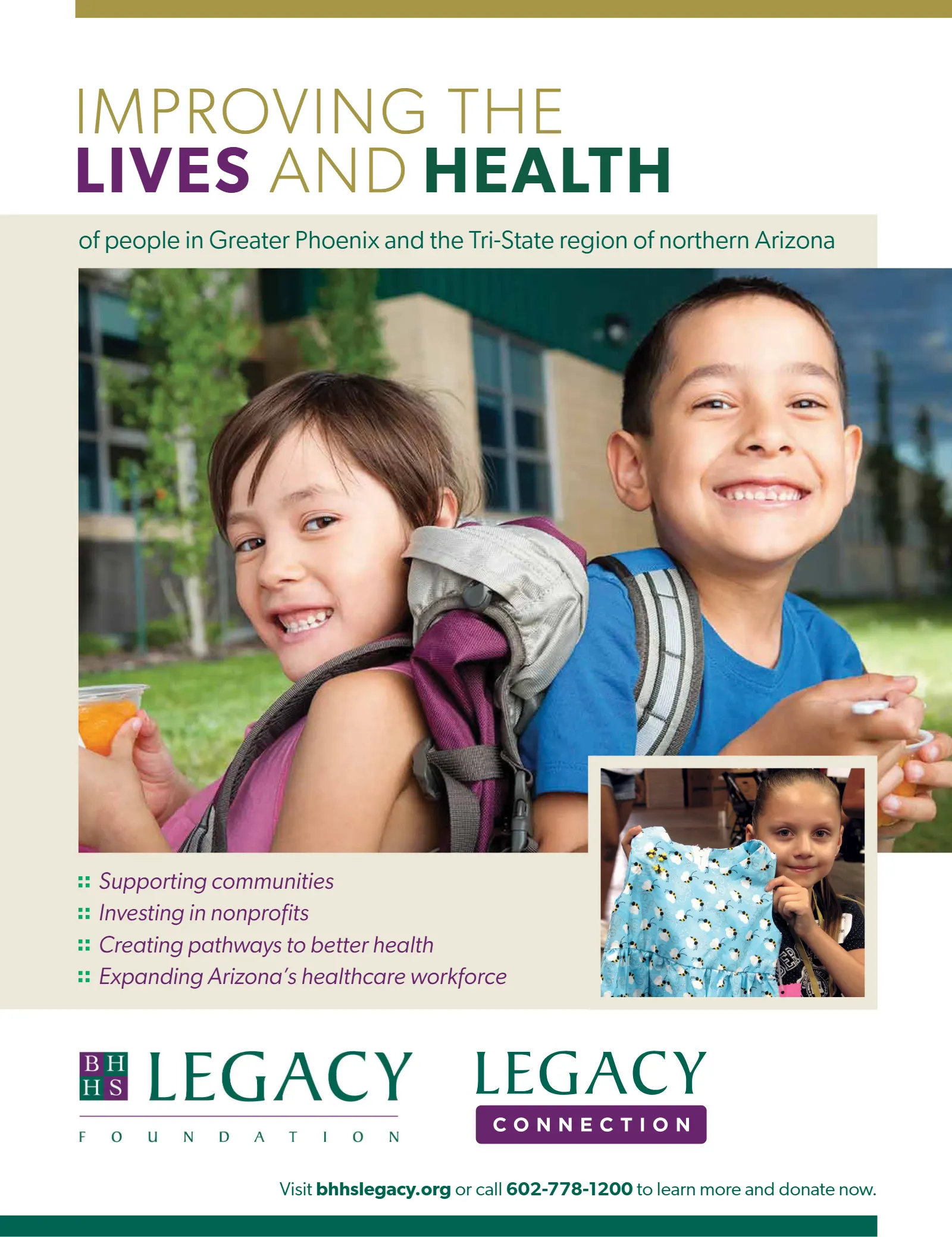
IMPROVING THE LIVES AND HEALTH of people in Greater Phoenix and the Tri-State region of northern Arizona Visit bhhslegacy.org or call 602-778-1200 to learn more and donate now. Supporting communities Investing in nonprofits Creating pathways to better health Expanding Arizona’s healthcare workforce