
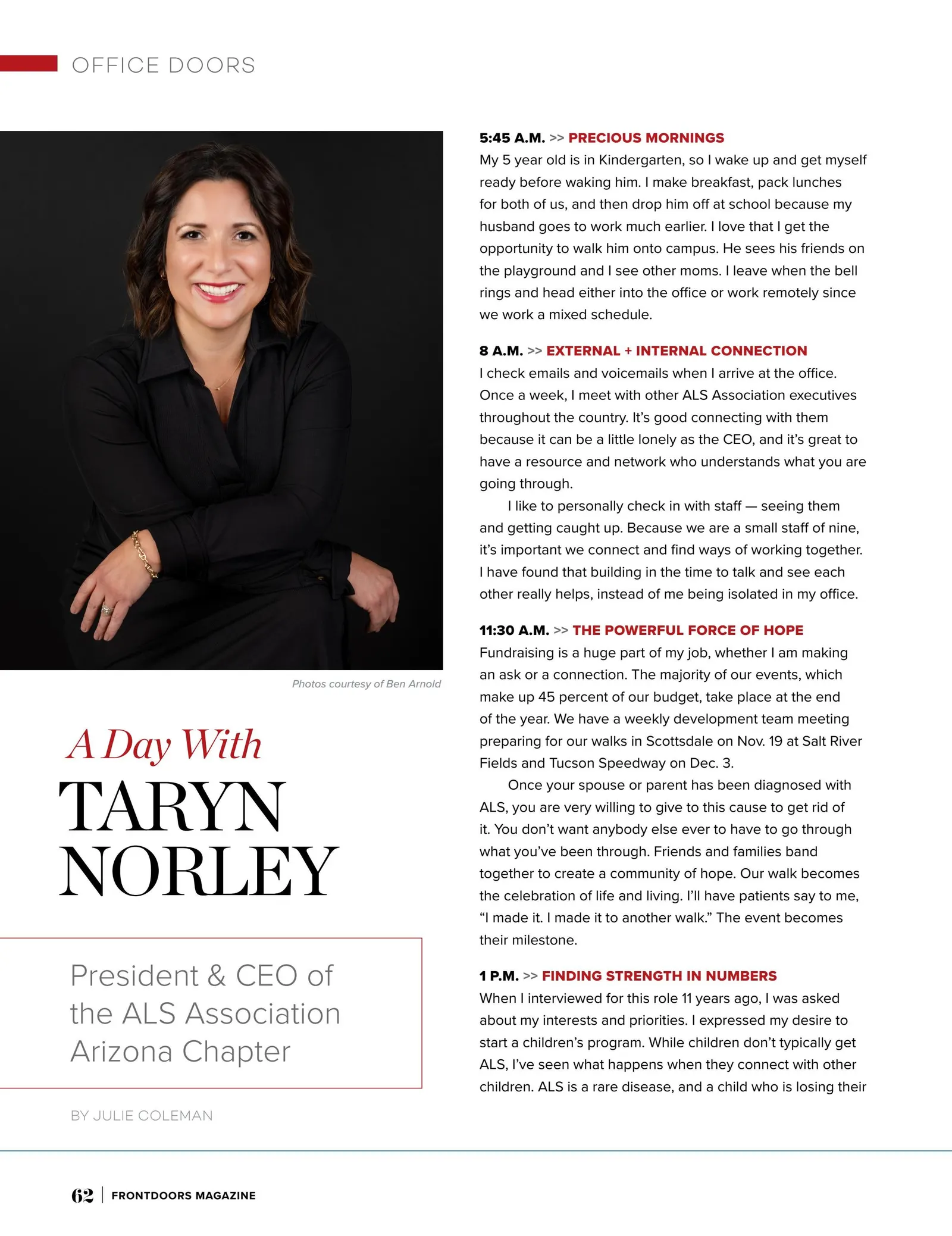
BY JULIE COLEMAN President & CEO of the ALS Association Arizona Chapter A Day With 5:45 A.M. >> PRECIOUS MORNINGS My 5 year old is in Kindergarten, so I wake up and get myself ready before waking him. I make breakfast, pack lunches for both of us, and then drop him off at school because my husband goes to work much earlier. I love that I get the opportunity to walk him onto campus. He sees his friends on the playground and I see other moms. I leave when the bell rings and head either into the office or work remotely since we work a mixed schedule. 8 A.M. >> EXTERNAL + INTERNAL CONNECTION I check emails and voicemails when I arrive at the office. Once a week, I meet with other ALS Association executives throughout the country. It’s good connecting with them because it can be a little lonely as the CEO, and it’s great to have a resource and network who understands what you are going through. I like to personally check in with staff — seeing them and getting caught up. Because we are a small staff of nine, it’s important we connect and find ways of working together. I have found that building in the time to talk and see each other really helps, instead of me being isolated in my office. 11:30 A.M. >> THE POWERFUL FORCE OF HOPE Fundraising is a huge part of my job, whether I am making an ask or a connection. The majority of our events, which make up 45 percent of our budget, take place at the end of the year. We have a weekly development team meeting preparing for our walks in Scottsdale on Nov. 19 at Salt River Fields and Tucson Speedway on Dec. 3. Once your spouse or parent has been diagnosed with ALS, you are very willing to give to this cause to get rid of it. You don’t want anybody else ever to have to go through what you’ve been through. Friends and families band together to create a community of hope. Our walk becomes the celebration of life and living. I’ll have patients say to me, “I made it. I made it to another walk.” The event becomes their milestone. 1 P.M. >> FINDING STRENGTH IN NUMBERS When I interviewed for this role 11 years ago, I was asked about my interests and priorities. I expressed my desire to start a children’s program. While children don’t typically get ALS, I’ve seen what happens when they connect with other children. ALS is a rare disease, and a child who is losing their TARYN NORLEY Photos courtesy of Ben Arnold OFFICE DOORS 62 | FRONTDOORS MAGAZINE
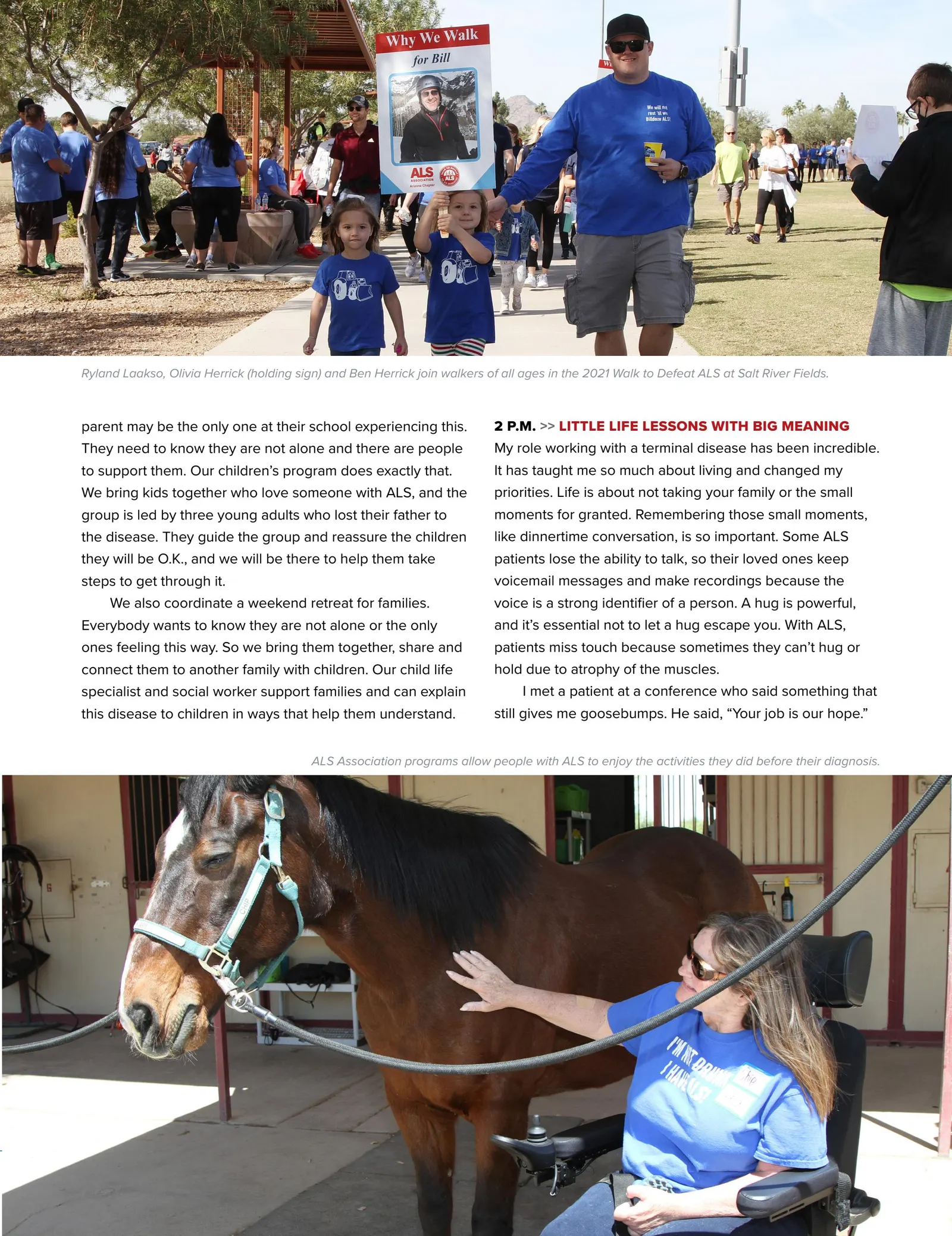
parent may be the only one at their school experiencing this. They need to know they are not alone and there are people to support them. Our children’s program does exactly that. We bring kids together who love someone with ALS, and the group is led by three young adults who lost their father to the disease. They guide the group and reassure the children they will be O.K., and we will be there to help them take steps to get through it. We also coordinate a weekend retreat for families. Everybody wants to know they are not alone or the only ones feeling this way. So we bring them together, share and connect them to another family with children. Our child life specialist and social worker support families and can explain this disease to children in ways that help them understand. 2 P.M. >> LITTLE LIFE LESSONS WITH BIG MEANING My role working with a terminal disease has been incredible. It has taught me so much about living and changed my priorities. Life is about not taking your family or the small moments for granted. Remembering those small moments, like dinnertime conversation, is so important. Some ALS patients lose the ability to talk, so their loved ones keep voicemail messages and make recordings because the voice is a strong identifier of a person. A hug is powerful, and it’s essential not to let a hug escape you. With ALS, patients miss touch because sometimes they can’t hug or hold due to atrophy of the muscles. I met a patient at a conference who said something that still gives me goosebumps. He said, “Your job is our hope.” Ryland Laakso, Olivia Herrick (holding sign) and Ben Herrick join walkers of all ages in the 2021 Walk to Defeat ALS at Salt River Fields. ALS Association programs allow people with ALS to enjoy the activities they did before their diagnosis.