
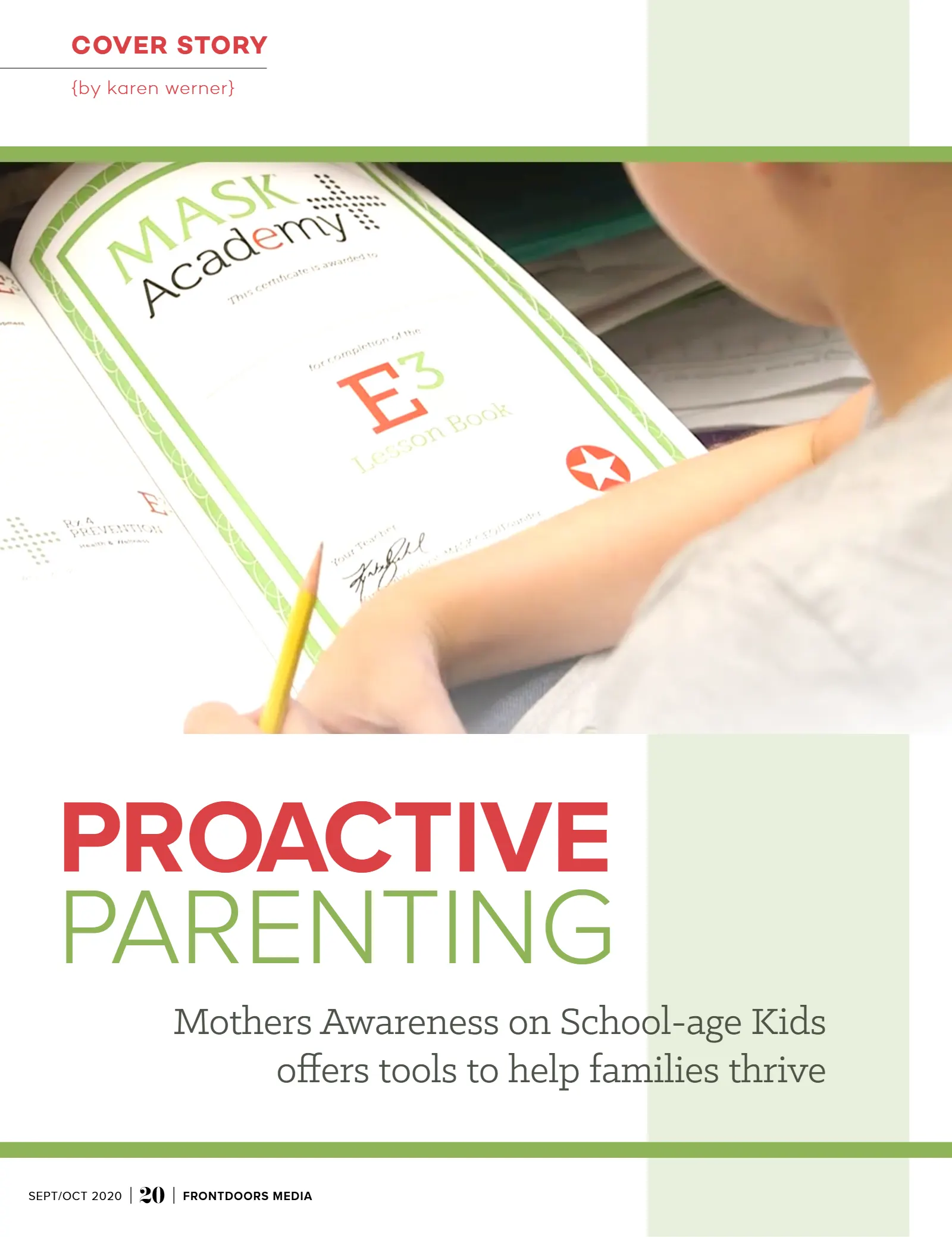
PROACTIVE PARENTING Mothers Awareness on School-age Kids offers tools to help families thrive SEPT/OCT 2020 | 20 | FRONTDOORS MEDIA COVER STORY {by karen werner}
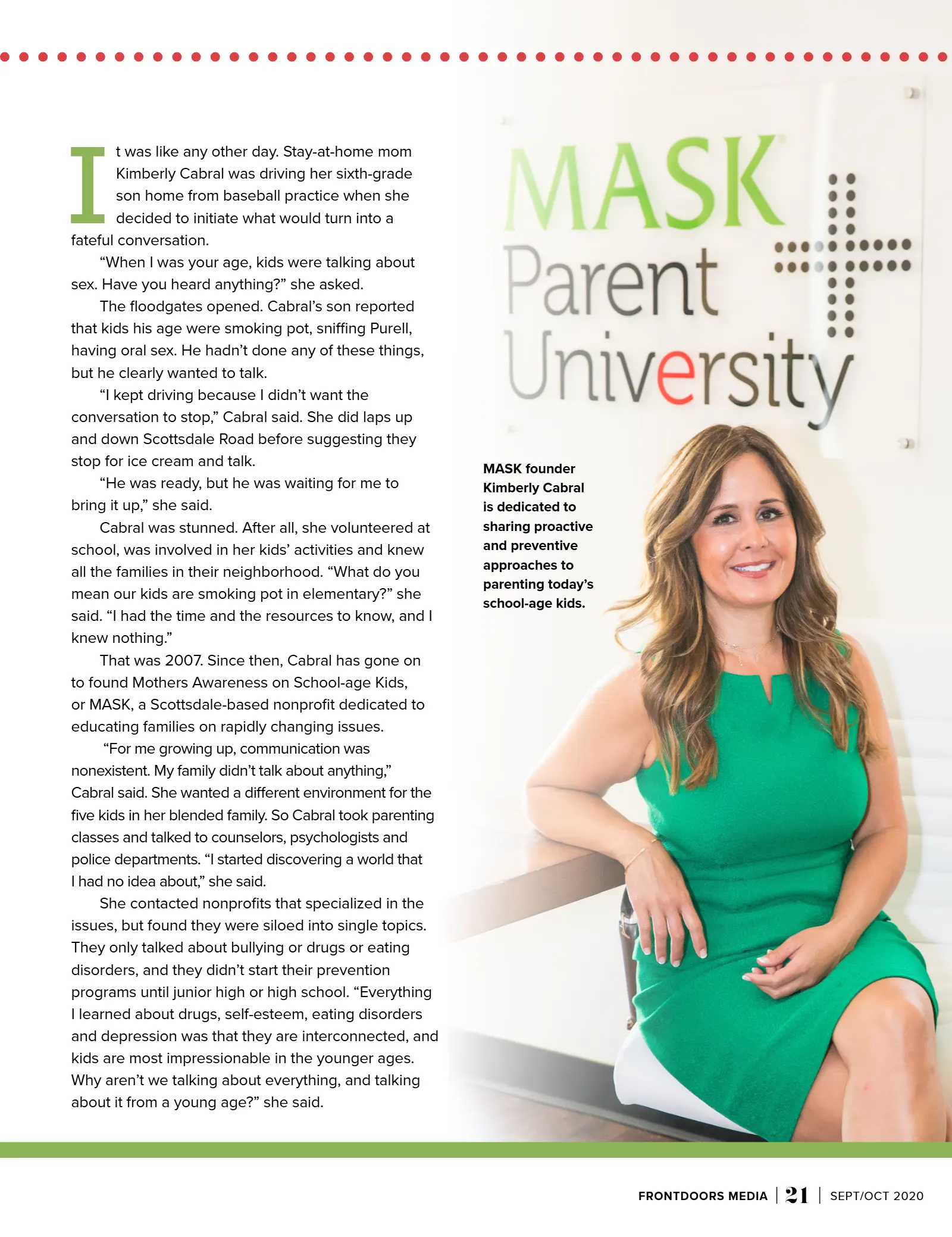
MASK founder Kimberly Cabral is dedicated to sharing proactive and preventive approaches to parenting today’s school-age kids. I t was like any other day. Stay-at-home mom Kimberly Cabral was driving her sixth-grade son home from baseball practice when she decided to initiate what would turn into a fateful conversation. “When I was your age, kids were talking about sex. Have you heard anything?” she asked. The floodgates opened. Cabral’s son reported that kids his age were smoking pot, sniffing Purell, having oral sex. He hadn’t done any of these things, but he clearly wanted to talk. “I kept driving because I didn’t want the conversation to stop,” Cabral said. She did laps up and down Scottsdale Road before suggesting they stop for ice cream and talk. “He was ready, but he was waiting for me to bring it up,” she said. Cabral was stunned. After all, she volunteered at school, was involved in her kids’ activities and knew all the families in their neighborhood. “What do you mean our kids are smoking pot in elementary?” she said. “I had the time and the resources to know, and I knew nothing.” That was 2007. Since then, Cabral has gone on to found Mothers Awareness on School-age Kids, or MASK, a Scottsdale-based nonprofit dedicated to educating families on rapidly changing issues. “For me growing up, communication was nonexistent. My family didn’t talk about anything,” Cabral said. She wanted a different environment for the five kids in her blended family. So Cabral took parenting classes and talked to counselors, psychologists and police departments. “I started discovering a world that I had no idea about,” she said. She contacted nonprofits that specialized in the issues, but found they were siloed into single topics. They only talked about bullying or drugs or eating disorders, and they didn’t start their prevention programs until junior high or high school. “Everything I learned about drugs, self-esteem, eating disorders and depression was that they are interconnected, and kids are most impressionable in the younger ages. Why aren’t we talking about everything, and talking about it from a young age?” she said. FRONTDOORS MEDIA | 21 | SEPT/OCT 2020