
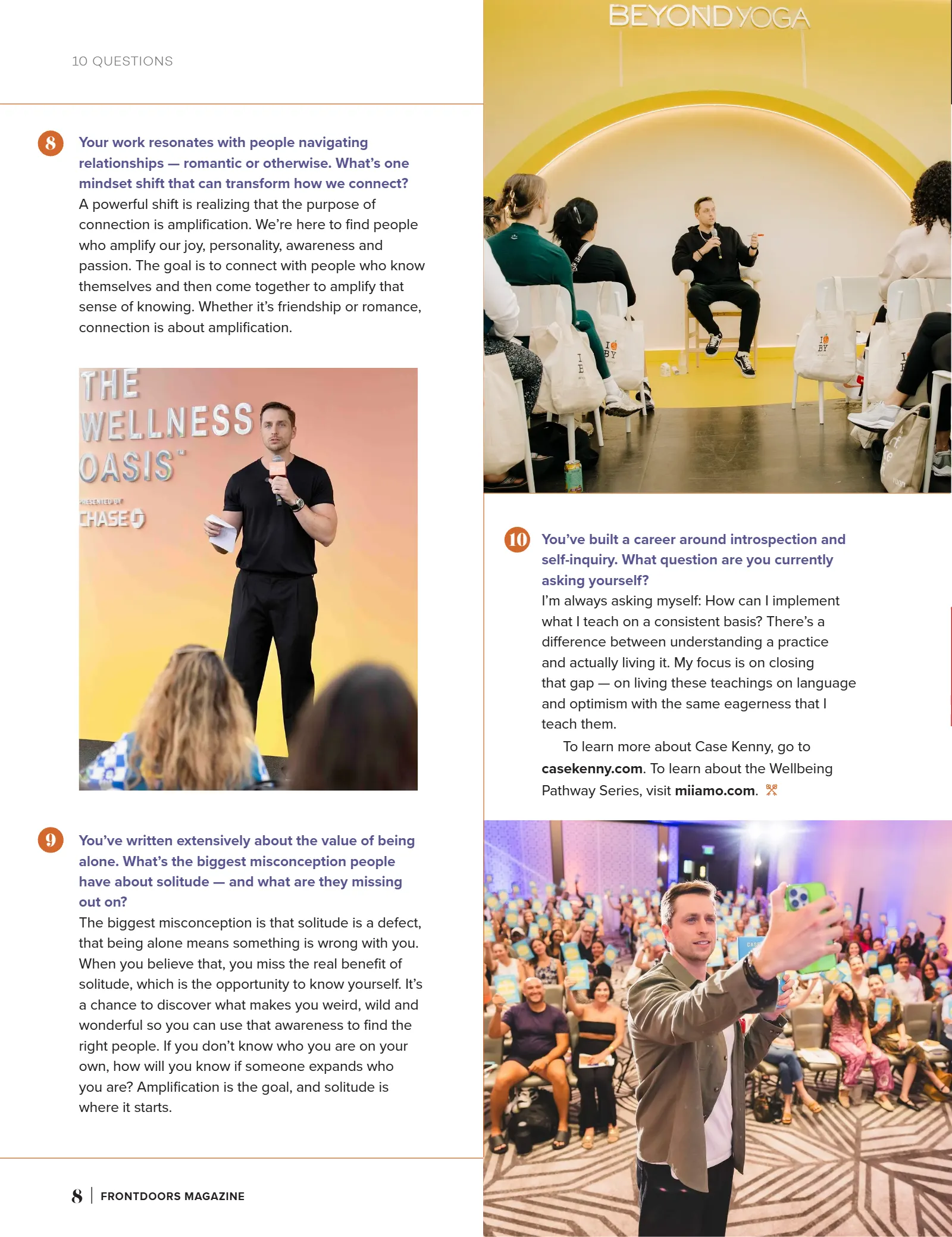
Your work resonates with people navigating relationships — romantic or otherwise. What’s one mindset shift that can transform how we connect? A powerful shift is realizing that the purpose of connection is amplification. We’re here to find people who amplify our joy, personality, awareness and passion. The goal is to connect with people who know themselves and then come together to amplify that sense of knowing. Whether it’s friendship or romance, connection is about amplification. You’ve written extensively about the value of being alone. What’s the biggest misconception people have about solitude — and what are they missing out on? The biggest misconception is that solitude is a defect, that being alone means something is wrong with you. When you believe that, you miss the real benefit of solitude, which is the opportunity to know yourself. It’s a chance to discover what makes you weird, wild and wonderful so you can use that awareness to find the right people. If you don’t know who you are on your own, how will you know if someone expands who you are? Amplification is the goal, and solitude is where it starts. You’ve built a career around introspection and self-inquiry. What question are you currently asking yourself? I’m always asking myself: How can I implement what I teach on a consistent basis? There’s a difference between understanding a practice and actually living it. My focus is on closing that gap — on living these teachings on language and optimism with the same eagerness that I teach them. To learn more about Case Kenny, go to casekenny.com . To learn about the Wellbeing Pathway Series, visit miiamo.com . 10 QUESTIONS 8 9 10 8 | FRONTDOORS MAGAZINE
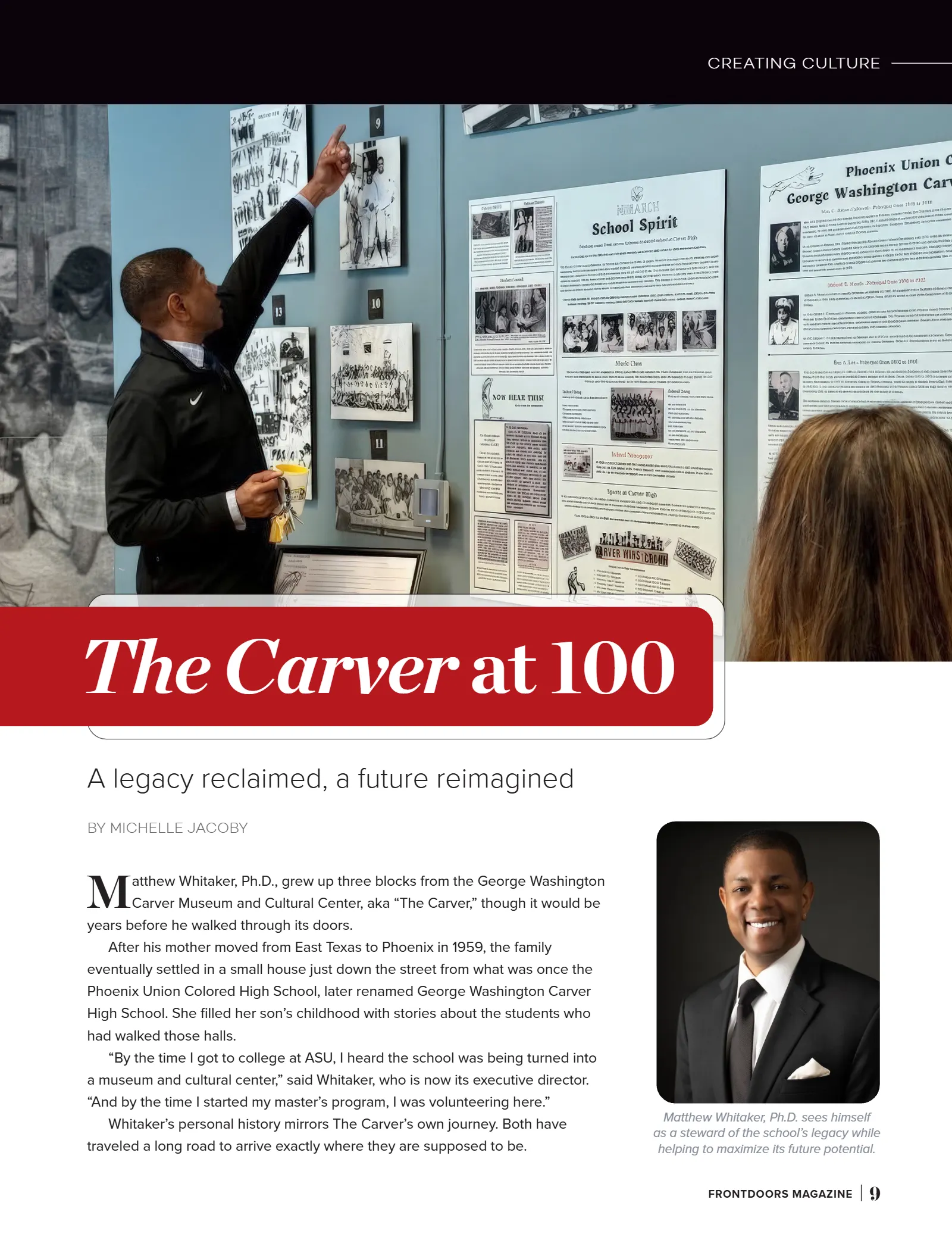
FRONTDOORS MAGAZINE | 9 CREATING CULTURE M atthew Whitaker, Ph.D., grew up three blocks from the George Washington Carver Museum and Cultural Center, aka “The Carver,” though it would be years before he walked through its doors. After his mother moved from East Texas to Phoenix in 1959, the family eventually settled in a small house just down the street from what was once the Phoenix Union Colored High School, later renamed George Washington Carver High School. She filled her son’s childhood with stories about the students who had walked those halls. “By the time I got to college at ASU, I heard the school was being turned into a museum and cultural center,” said Whitaker, who is now its executive director. “And by the time I started my master’s program, I was volunteering here.” Whitaker’s personal history mirrors The Carver’s own journey. Both have traveled a long road to arrive exactly where they are supposed to be. BY MICHELLE JACOBY A legacy reclaimed, a future reimagined Matthew Whitaker, Ph.D. sees himself as a steward of the school’s legacy while helping to maximize its future potential. The Carver at 100