
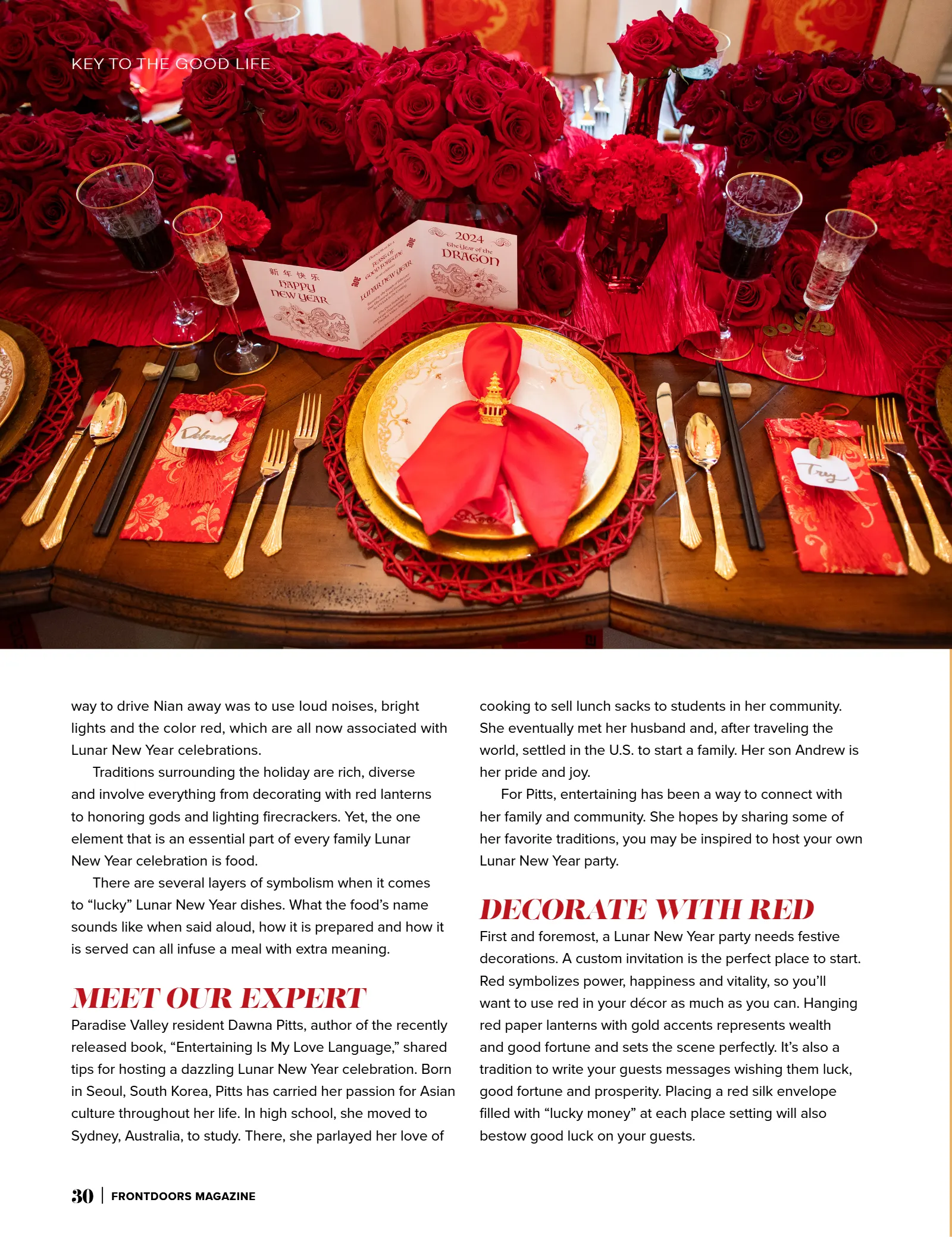
30 | FRONTDOORS MAGAZINE way to drive Nian away was to use loud noises, bright lights and the color red, which are all now associated with Lunar New Year celebrations. Traditions surrounding the holiday are rich, diverse and involve everything from decorating with red lanterns to honoring gods and lighting firecrackers. Yet, the one element that is an essential part of every family Lunar New Year celebration is food. There are several layers of symbolism when it comes to “lucky” Lunar New Year dishes. What the food’s name sounds like when said aloud, how it is prepared and how it is served can all infuse a meal with extra meaning. MEET OUR EXPERT Paradise Valley resident Dawna Pitts, author of the recently released book, “Entertaining Is My Love Language,” shared tips for hosting a dazzling Lunar New Year celebration. Born in Seoul, South Korea, Pitts has carried her passion for Asian culture throughout her life. In high school, she moved to Sydney, Australia, to study. There, she parlayed her love of cooking to sell lunch sacks to students in her community. She eventually met her husband and, after traveling the world, settled in the U.S. to start a family. Her son Andrew is her pride and joy. For Pitts, entertaining has been a way to connect with her family and community. She hopes by sharing some of her favorite traditions, you may be inspired to host your own Lunar New Year party. DECORATE WITH RED First and foremost, a Lunar New Year party needs festive decorations. A custom invitation is the perfect place to start. Red symbolizes power, happiness and vitality, so you’ll want to use red in your décor as much as you can. Hanging red paper lanterns with gold accents represents wealth and good fortune and sets the scene perfectly. It’s also a tradition to write your guests messages wishing them luck, good fortune and prosperity. Placing a red silk envelope filled with “lucky money” at each place setting will also bestow good luck on your guests. KEY TO THE GOOD LIFE 30 | FRONTDOORS MAGAZINE
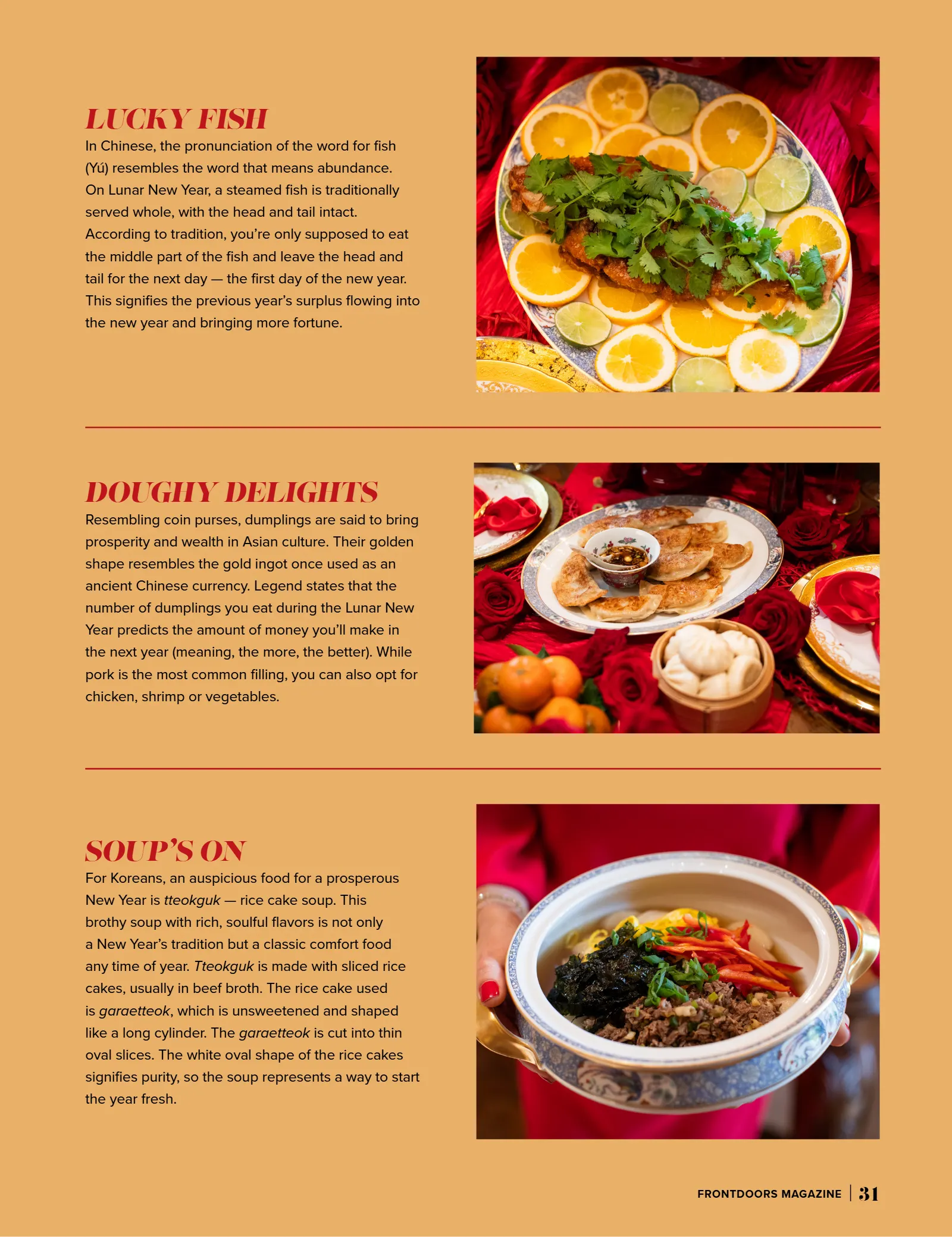
FRONTDOORS MAGAZINE | 31 LUCKY FISH In Chinese, the pronunciation of the word for fish (Yú) resembles the word that means abundance. On Lunar New Year, a steamed fish is traditionally served whole, with the head and tail intact. According to tradition, you’re only supposed to eat the middle part of the fish and leave the head and tail for the next day — the first day of the new year. This signifies the previous year’s surplus flowing into the new year and bringing more fortune. DOUGHY DELIGHTS Resembling coin purses, dumplings are said to bring prosperity and wealth in Asian culture. Their golden shape resembles the gold ingot once used as an ancient Chinese currency. Legend states that the number of dumplings you eat during the Lunar New Year predicts the amount of money you’ll make in the next year (meaning, the more, the better). While pork is the most common filling, you can also opt for chicken, shrimp or vegetables. SOUP’S ON For Koreans, an auspicious food for a prosperous New Year is tteokguk — rice cake soup. This brothy soup with rich, soulful flavors is not only a New Year’s tradition but a classic comfort food any time of year. Tteokguk is made with sliced rice cakes, usually in beef broth. The rice cake used is garaetteok , which is unsweetened and shaped like a long cylinder. The garaetteok is cut into thin oval slices. The white oval shape of the rice cakes signifies purity, so the soup represents a way to start the year fresh. FRONTDOORS MAGAZINE | 31