
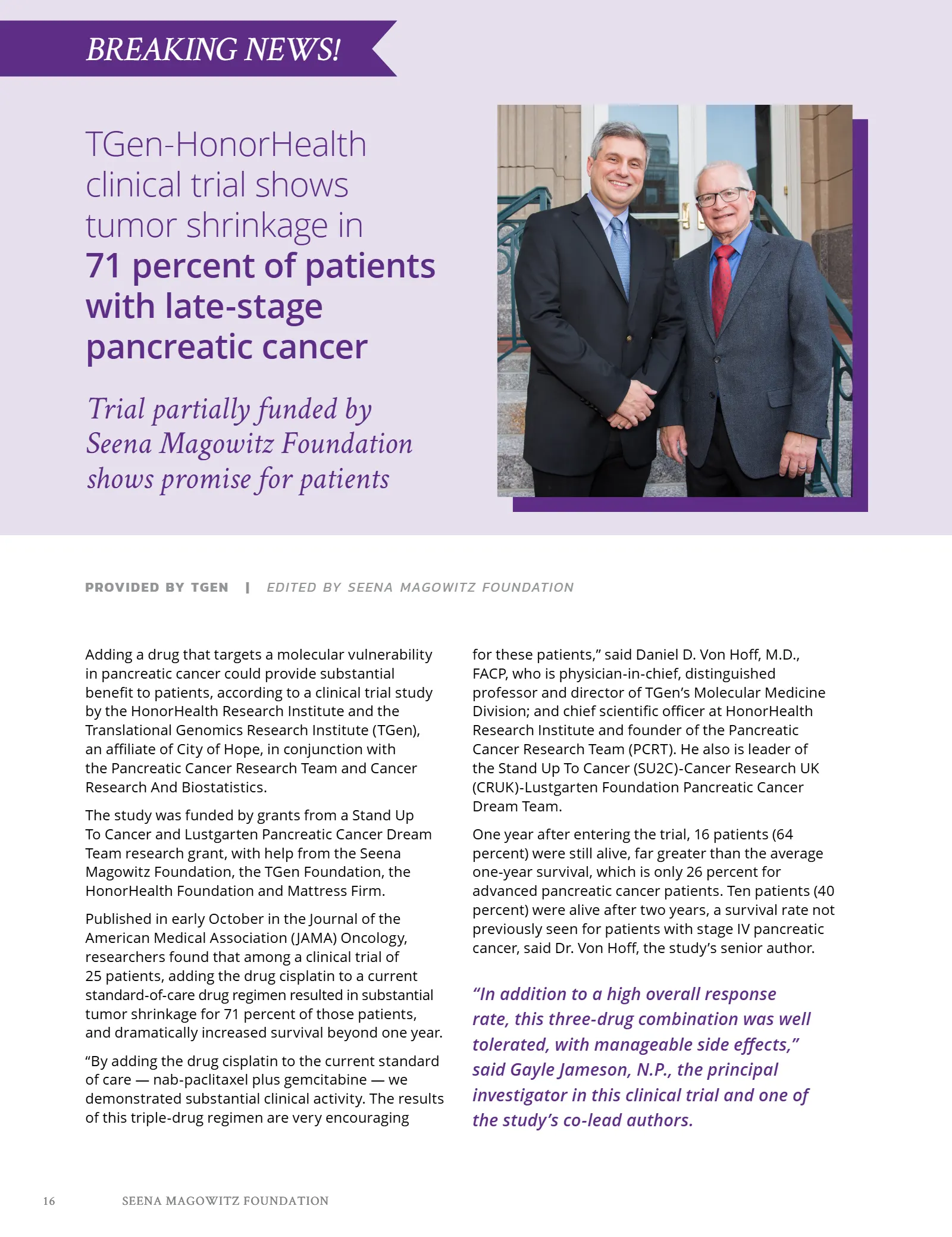
16 SEENA MAGOWITZ FOUNDATION TGen-HonorHealth clinical trial shows tumor shrinkage in 71 percent of patients with late-stage pancreatic cancer Adding a drug that targets a molecular vulnerability in pancreatic cancer could provide substantial benefit to patients, according to a clinical trial study by the HonorHealth Research Institute and the Translational Genomics Research Institute (TGen), an affiliate of City of Hope, in conjunction with the Pancreatic Cancer Research Team and Cancer Research And Biostatistics. The study was funded by grants from a Stand Up To Cancer and Lustgarten Pancreatic Cancer Dream Team research grant, with help from the Seena Magowitz Foundation, the TGen Foundation, the HonorHealth Foundation and Mattress Firm. Published in early October in the Journal of the American Medical Association (JAMA) Oncology, researchers found that among a clinical trial of 25 patients, adding the drug cisplatin to a current standard-of-care drug regimen resulted in substantial tumor shrinkage for 71 percent of those patients, and dramatically increased survival beyond one year. “By adding the drug cisplatin to the current standard of care — nab-paclitaxel plus gemcitabine — we demonstrated substantial clinical activity. The results of this triple-drug regimen are very encouraging for these patients,” said Daniel D. Von Hoff, M.D., FACP, who is physician-in-chief, distinguished professor and director of TGen’s Molecular Medicine Division; and chief scientific officer at HonorHealth Research Institute and founder of the Pancreatic Cancer Research Team (PCRT). He also is leader of the Stand Up To Cancer (SU2C)-Cancer Research UK (CRUK)-Lustgarten Foundation Pancreatic Cancer Dream Team. One year after entering the trial, 16 patients (64 percent) were still alive, far greater than the average one-year survival, which is only 26 percent for advanced pancreatic cancer patients. Ten patients (40 percent) were alive after two years, a survival rate not previously seen for patients with stage IV pancreatic cancer, said Dr. Von Hoff, the study’s senior author. “In a ddition to a high overall response rate, this three-drug combination was well tolerated, with manageable side effects,” said Gayle Jameson, N.P., the principal investigator in this clinical trial and one of the study ’s co-lead authors. 16 SEENA MAGOWITZ FOUNDATION BREAKING NEWS! PROVIDE D BY TG E N | EDITED BY SEENA MAGOWITZ FOUN DATION Trial partially funded by Seena Magowitz Foundation shows promise for patients
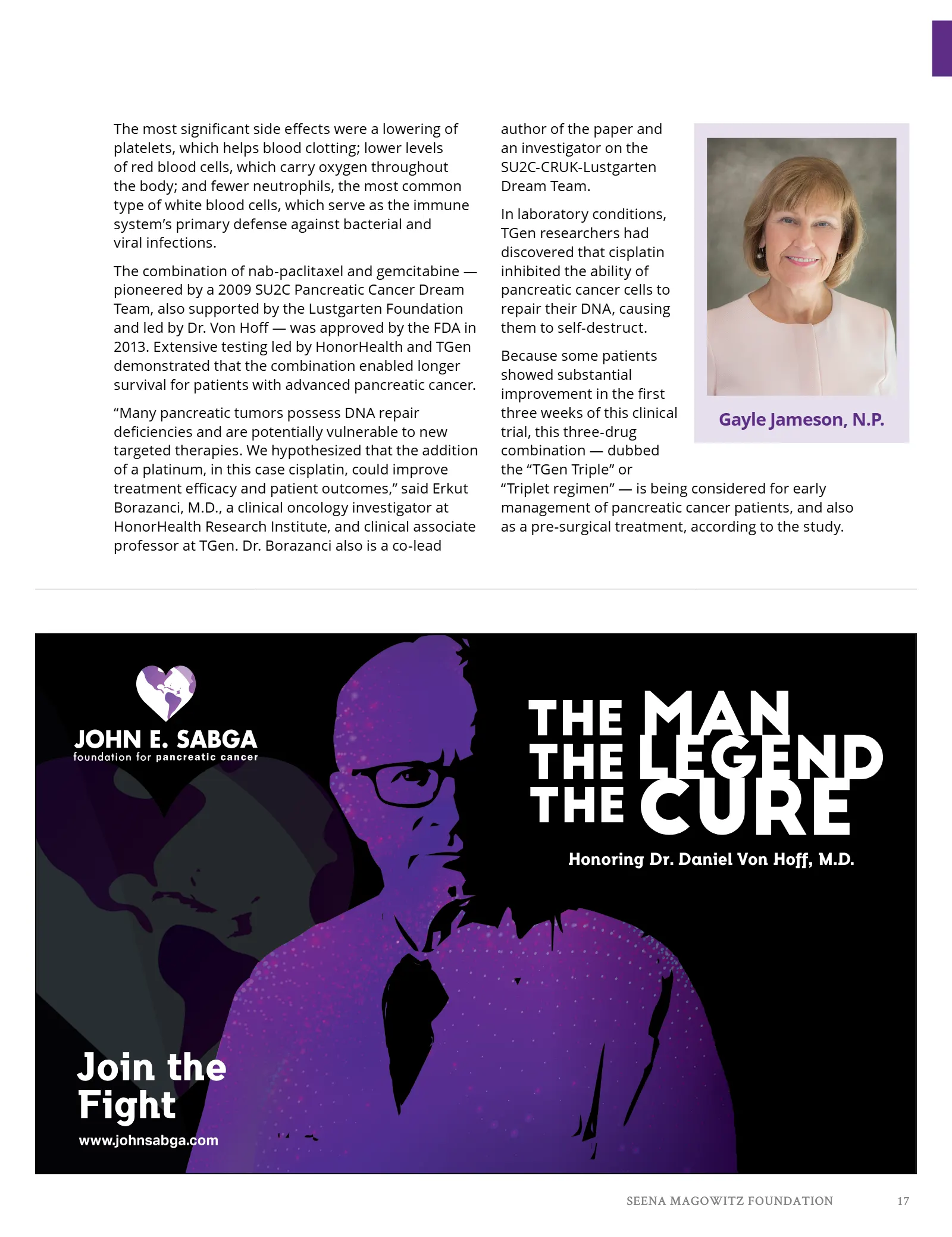
SEENA MAGOWITZ FOUNDATION 17 The most significant side effects were a lowering of platelets, which helps blood clotting; lower levels of red blood cells, which carry oxygen throughout the body; and fewer neutrophils, the most common type of white blood cells, which serve as the immune system’s primary defense against bacterial and viral infections. The combination of nab-paclitaxel and gemcitabine — pioneered by a 2009 SU2C Pancreatic Cancer Dream Team, also supported by the Lustgarten Foundation and led by Dr. Von Hoff — was approved by the FDA in 2013. Extensive testing led by HonorHealth and TGen demonstrated that the combination enabled longer survival for patients with advanced pancreatic cancer. “Many pancreatic tumors possess DNA repair deficiencies and are potentially vulnerable to new targeted therapies. We hypothesized that the addition of a platinum, in this case cisplatin, could improve treatment efficacy and patient outcomes,” said Erkut Borazanci, M.D., a clinical oncology investigator at HonorHealth Research Institute, and clinical associate professor at TGen. Dr. Borazanci also is a co-lead SEENA MAGOWITZ FOUNDATION 17 author of the paper and an investigator on the SU2C-CRUK-Lustgarten Dream Team. In laboratory conditions, TGen researchers had discovered that cisplatin inhibited the ability of pancreatic cancer cells to repair their DNA, causing them to self-destruct. Because some patients showed substantial improvement in the first three weeks of this clinical trial, this three-drug combination — dubbed the “TGen Triple” or “Triplet regimen” — is being considered for early management of pancreatic cancer patients, and also as a pre-surgical treatment, according to the study. Gayle Jameson, N.P.