
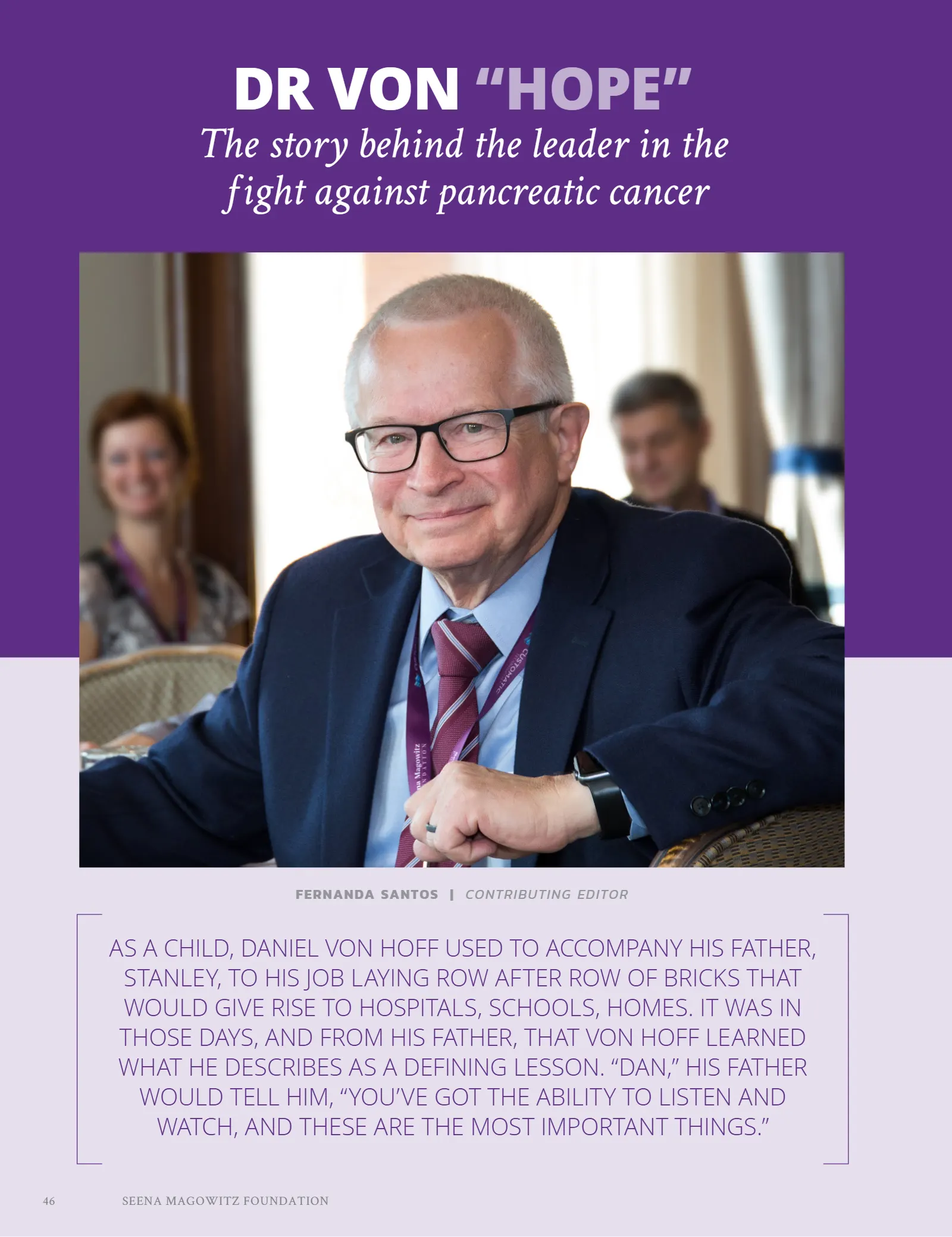

FE RNANDA SANTOS | CONTRI BUTI NG EDITOR The story behind the leader in the fight against pancreatic cancer AS A CHILD, DANIEL VON HOFF USED TO ACCOMPANY HIS FATHER, STANLEY, TO HIS JOB LAYING ROW AFTER ROW OF BRICKS THAT WOULD GIVE RISE TO HOSPITALS, SCHOOLS, HOMES. IT WAS IN THOSE DAYS, AND FROM HIS FATHER, THAT VON HOFF LEARNED WHAT HE DESCRIBES AS A DEFINING LESSON. “DAN,” HIS FATHER WOULD TELL HIM, “YOU’VE GOT THE ABILITY TO LISTEN AND WATCH, AND THESE ARE THE MOST IMPORTANT THINGS.” DR VON “HOPE” 46 SEENA MAGOWITZ FOUNDATION
SEENA MAGOWITZ FOUNDATION 47 T he lesson would present itself again and again — in the words of Amber Morgan, his teacher in the one-room school he at - tended outside Oshkosh, Wisconsin, and Ken Artiss, the psychiatrist who helped train him and other fellows at the National Cancer Institute in Bethesda, Maryland. Artiss explained to him that he owed every patient his undevoted atten - tion because it is the patient “who is going to tell you what’s wrong, what’s bothering them the most, and you have to listen to them.” It is because he listens that Dr. Von Hoff discovered that being a doctor isn’t just about having the right degrees, training and credentials. It is about giving his patients what they need. As an intern in New York, while studying at Columbia Medical School, that meant giving a woman whose leukemia had caused her to go blind a chance to spend time with her seven children, even though children at the time weren’t allowed inside hospitals. It meant going against the advice of experienced nurses years ago and treating a little girl hobbled by neuroblastoma with a new chemotherapy drug, then being rewarded by seeing her four days later joyfully ride a tricycle in the hospital hallways. Once, while working at the Audie L. Murphy VA Hospital in San Antonio, Texas, Dr. Von Hoff heard a pancreatic cancer patient tell him about a newfound taste for Kentucky Fried Chicken, which struck him as